
Thyroid Blood Tests Explained: TSH, FT4, FT3, Antibodies & Results
Thyroid blood tests help assess how your thyroid is functioning and can support the investigation of symptoms such as persistent tiredness, unexplained weight change, feeling unusually hot or cold, palpitations, menstrual changes and changes to your hair or skin.
This guide explains what a thyroid blood test is called, what TSH, FT4 and FT3 mean, when thyroid antibodies may be useful, what borderline results can mean, and how to compare private thyroid blood tests at Marylebone Diagnostic Centre.
What is a thyroid blood test called?
You may therefore see terms such as thyroid function test, TSH blood test, FT4 test, FT3 test, thyroid antibody test or thyroid profile.
These terms are related, but they do not necessarily describe exactly the same combination of blood tests.
What does the thyroid do?
The thyroid is a small butterfly-shaped gland at the front of your neck. Thyroid hormones influence metabolism, body temperature, heart rate, energy and reproductive function.
Underactive thyroid
Hypothyroidism can be associated with symptoms including persistent tiredness, feeling cold, weight gain, constipation, dry skin, hair changes and menstrual disturbance.
Overactive thyroid
Hyperthyroidism can be associated with palpitations, tremor, sweating, heat intolerance, anxiety, difficulty sleeping and unexplained weight loss.
These symptoms are not specific to thyroid disease. Blood results should be interpreted alongside symptoms, medical history, medication and other relevant clinical information.
What do thyroid blood tests measure?
| Thyroid marker | What it measures |
|---|---|
|
TSH Thyroid-stimulating hormone | TSH is produced by the pituitary gland and signals the thyroid. It is commonly used as the initial biochemical marker when assessing thyroid function. |
|
FT4 Free thyroxine | FT4 measures circulating free thyroxine and is interpreted alongside TSH and the clinical picture. |
|
FT3 Free triiodothyronine | FT3 provides additional information about circulating active thyroid hormone and can be particularly useful in some cases where hyperthyroidism is suspected. |
|
A-TPO Anti-thyroid peroxidase antibodies | A-TPO antibodies may support investigation of autoimmune thyroid disease, including Hashimoto’s thyroiditis. |
|
A-TG Anti-thyroglobulin antibodies | A-TG is another thyroid autoantibody. Its relevance depends on the clinical context and it is not a replacement for thyroid function testing. |
How are TSH, FT4 and FT3 interpreted together?
Thyroid results should not usually be interpreted from one number in isolation. The relationship between TSH and circulating thyroid hormones provides much more useful information.
In many adults, TSH is used as the initial thyroid marker. If TSH is outside the laboratory reference range, additional thyroid hormone measurements such as FT4 and, in appropriate circumstances, FT3 help establish the biochemical pattern.
What do borderline thyroid blood test results mean?
For example, a raised TSH with FT4 remaining within the reference range can occur in subclinical hypothyroidism. A low TSH with thyroid hormones remaining within range can occur in subclinical hyperthyroidism.
The significance of a borderline result depends on the actual values, symptoms, previous results, age, pregnancy status, medication, medical history and other clinical factors.
Repeat testing may sometimes be appropriate rather than drawing a conclusion from a single mildly abnormal result.
Which thyroid blood test should I choose?
There is no single universal test called a “full thyroid panel”. Different thyroid profiles measure different combinations of thyroid hormones and antibodies.
MDC offers several private thyroid blood test options. The cards below are clickable and take you directly to the relevant MDC test information.
Thyroid Profile 1
A focused assessment of thyroid function using TSH and free T4.
View Thyroid Profile 1 →Thyroid Profile 2
Adds FT3 for a broader assessment of circulating thyroid hormones.
View Thyroid Profile 2 →Thyroid Profile 3
Includes TSH alongside free T4 and total T3 and T4 measurements.
View Thyroid Profile 3 →Thyroid Profile 4
Combines thyroid function markers with thyroid antibodies for a broader thyroid assessment.
View Thyroid Profile 4 →Thyroid Profile 5
MDC’s broadest listed thyroid profile, combining thyroid hormone measurements with thyroid antibodies.
View Thyroid Profile 5 →Thyroid Antibodies
Focused antibody testing where investigation of autoimmune thyroid disease is relevant.
View Thyroid Antibodies →The largest panel is not automatically the most appropriate test for every person. Compare the available profiles or speak with the MDC team if you are unsure which option best matches what you want to investigate.
Are thyroid blood tests accurate?
Thyroid function blood tests are central to assessing thyroid function, but laboratory results should always be interpreted in context.
Illness, medication and supplements can sometimes influence results. One important example is biotin, which is found in some hair, skin, nail and multivitamin supplements and can interfere with certain thyroid laboratory tests.
Tell the clinical team about medicines and supplements you take when having thyroid blood tests.
Do I need to fast for a thyroid blood test?
Thyroid function testing itself does not usually require fasting. However, fasting requirements may be different if your thyroid test is being performed alongside other blood tests.
If you take thyroid medication or supplements, do not stop or alter them solely for a blood test unless you have been advised to do so by an appropriate healthcare professional.
When might a thyroid blood test be useful?
Thyroid testing may be considered when symptoms or clinical circumstances raise the possibility of thyroid dysfunction.
- Persistent unexplained fatigue
- Unexplained weight change
- Feeling unusually cold or hot
- Palpitations or tremor
- Changes in bowel habits
- Menstrual changes
- Hair or skin changes
- Family history of thyroid disease
- Previous abnormal thyroid results
- Possible autoimmune thyroid disease
These symptoms can have many causes unrelated to the thyroid. Testing should therefore form part of an appropriate assessment rather than being treated as a diagnosis by itself.
Private thyroid blood tests in London
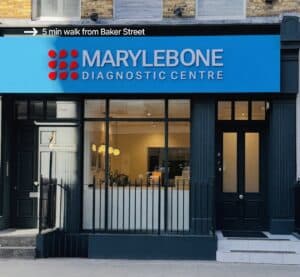
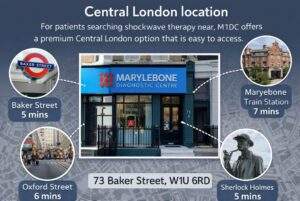
Marylebone Diagnostic Centre provides private thyroid blood testing at 73 Baker Street, London W1U 6RD.
MDC offers thyroid profiles ranging from focused TSH and FT4 testing through to broader profiles containing FT3 and thyroid antibodies. A GP referral is not required to book a private blood test.
If you already have previous thyroid results, bring them with you or make them available when seeking clinical advice. If you are unsure which profile to book, contact MDC before your appointment and the available testing options can be explained.
Quick Answers: Thyroid Blood Testing
What is a thyroid blood test called?
What is TSH on a blood test?
What is thyroxine on a blood test?
What is FT3?
What do borderline thyroid blood test results mean?
What is a normal thyroid blood test reading?
Are thyroid blood tests accurate?
Do I need to fast for a thyroid blood test?
Can I request a private thyroid blood test?
Where can I get a private thyroid blood test in London?
What is included in a full thyroid blood test?
Clinical sources & further reading
This article is provided for general educational purposes and does not replace individual medical advice, diagnosis or treatment.
Need a private thyroid blood test in London?
Compare MDC’s thyroid profiles and choose the level of testing appropriate to your needs. Private blood testing is available at Marylebone Diagnostic Centre, 73 Baker Street, London W1U 6RD.
View MDC Thyroid Profiles