
Pelvic Pain in Women – Infection, Hormones or Deficiency? What Tests Reveal
Reviewed by Dr Lauren Holland • Marylebone Diagnostic Centre
Results within 24 – 42 hours. Westminster residents receive 20% off.
Pelvic pain in women is a common concern in London and can range from mild cramping to sharp, persistent discomfort. Some women feel pain after sex, during urination, before their period, or at random times during the month. Pelvic pain has many possible causes, including urinary infections, sexually transmitted infections (STIs), hormonal changes, pelvic inflammation, vitamin deficiency, iron deficiency and digestive issues.
Clinically, we see many London patients who worry their symptoms may be serious or related to a recent sexual encounter. Blood and urine tests are often the fastest and most accurate way to understand the cause. This guide explains why pelvic pain happens, what symptoms require testing, and which tests at Marylebone Diagnostic Centre provide clarity.
Why Does Pelvic Pain Happen?
Pelvic pain can originate from the:
- bladder
- uterus
- ovaries
- fallopian tubes
- cervix
- bowel
- pelvic floor muscles
Common causes include:
Urinary infections (UTIs)
Burning, frequency, pressure and low-grade pelvic pain.
Sexually transmitted infections
Chlamydia, gonorrhoea, mycoplasma, ureaplasma and trichomonas are common.
Hormonal changes
Ovulation, menstrual cramps, perimenopause.
Pelvic inflammatory disease (PID)
Occurs when infections spread upwards.
Vitamin and iron deficiency
Low vitamin D or ferritin increases pain sensitivity and cramping.
Digestive issues
Gas, constipation, bloating and IBS.
Because symptoms overlap, testing is essential.
Common Symptoms That Come with Pelvic Pain
Women frequently report:
- burning urination
- pain during sex
- vaginal discharge
- lower abdominal pressure
- spotting
- lower back pain
- bloating
- fatigue
- heavy periods
- irregular cycles
- pain after new sexual partner
- fever or chills
These patterns help indicate whether the cause is infectious, hormonal or nutritional.
When Is Pelvic Pain Serious?
Seek urgent assessment if you have:
- fever
- severe pelvic pain
- pain after sex
- heavy bleeding
- vomiting
- dizziness
- fainting
- sharp one-sided pain
- pain with discharge
- symptoms after unprotected sex
These may indicate infection or pelvic inflammation.
Risk Factors for Pelvic Pain in London
You may be more likely to develop pelvic pain if you:
- recently had unprotected sex
- have a new partner
- drink little water
- have a history of UTIs
- have low vitamin D
- have heavy periods (low iron)
- have hormonal irregularities
- experience high stress
- use scented products or irritants
- recently travelled
These patterns are common among London women.
What Tests Reveal About Pelvic Pain
At Marylebone Diagnostic Centre, several tests help identify the cause.
Advanced Sexual Health Panel (Advanced SH1)
The most important test for pelvic pain after sexual activity.
Detects:
- Chlamydia
- Gonorrhoea
- Mycoplasma
- Ureaplasma
- Trichomonas
- HIV (optional)
- Syphilis
- Hepatitis (optional)
Symptoms matched:
- pain during sex
- post-sex pelvic pain
- discharge
- spotting
- fever
- lower abdominal pain
Urine Analysis & Culture
First-line test for:
- burning
- urgency
- bladder pressure
- cloudy urine
- pain with urination
Urine culture identifies the exact bacteria responsible.
Full Blood Count (FBC)
Checks for infection, inflammation and anaemia.
Useful for:
- fever with pain
- fatigue
- heavy periods
Ferritin (Iron Stores)
Low ferritin is a major factor in:
- heavy periods
- painful cramps
- fatigue
- dizziness
Many women with pelvic pain have low iron.
Vitamin D & Vitamin B12
Low levels cause:
- increased pain sensitivity
- fatigue
- pelvic muscle spasms
- low energy
CRP (Inflammation Marker)
Useful when pelvic inflammatory disease (PID) is suspected.
Thyroid Panel
Hormonal imbalance can lead to irregular cycles, cramping and pelvic discomfort.
Wellness Profile
Recommended when symptoms are unclear or involve fatigue, heavy periods or hormonal instability.
Which MDC Profiles Should You Choose?
Symptom–Test Matching Table
| Symptom | Likely Cause | Recommended Test |
| Pain after sex | STI | Advanced SH1 |
| Burning urination | UTI | Urine Analysis |
| Pelvic pain + fever | PID or infection | FBC, CRP |
| Heavy periods + pelvic pain | Iron deficiency | Ferritin |
| Bloating + pelvic pain | Digestive or hormonal | Wellness Profile |
| Fatigue + pelvic pain | Vitamin deficiency | Vitamin & Mineral Profile |
FAQs (People Also Ask)
Book Your Pelvic Pain Tests at Marylebone Diagnostic Centre
Marylebone Diagnostic Centre
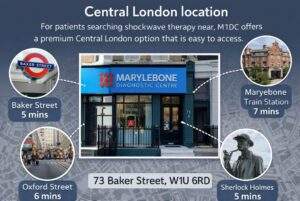
73 Baker Street, London W1U 6RD
Tel: +44 7495 970109
Open Monday–Saturday, 08:00–16:00
Fast, private and confidential testing.
Results within 24–42 hours.
Westminster residents receive 20% off.
Quick Links
- Cardiac Profile
- HbA1c Test
- Full Lipid Panel
- Fatigue and Energy Profile
- Kidney Function Test
- Electrolytes Test
- Liver Function Test
- Thyroid Function Test
- Magnesium Test
- Full Blood Count
- Urinalysis & Culture
- Book an Appointment
- ECG Testing
- Wellness Profile
- Pancreatic Profile
- Advanced Sexual Health Panel
- STI Testing London