
Semen Colour Chart
What Different Semen Colours May Mean
Changes in semen colour are common and often temporary. In most cases, variations are related to diet, hydration, ejaculation frequency, or minor inflammation. However, persistent colour changes may indicate infection, inflammation, or other reproductive conditions that require medical evaluation.
The chart below explains common semen colour variations and their possible causes.
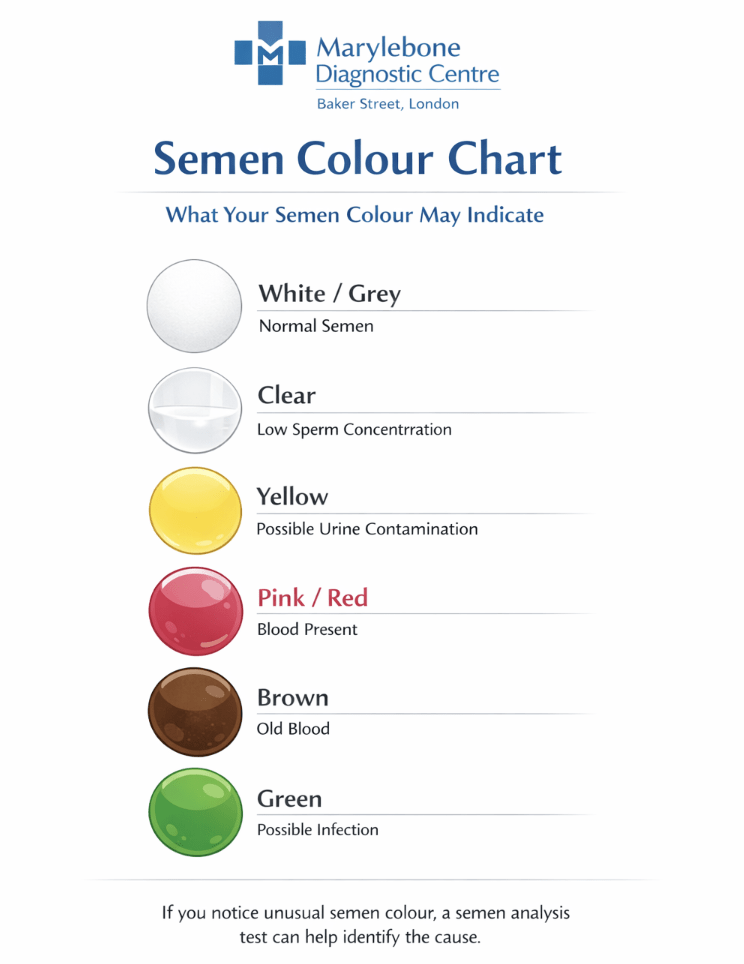
Semen Colour Reference Chart
| Semen Colour | Possible Causes | When to Consider Medical Advice |
|---|---|---|
| White / Grey | Normal semen appearance. Healthy seminal fluid mixed with sperm cells. | No medical concern if other symptoms are absent. |
| Clear / Watery | Frequent ejaculation, lower sperm concentration, or high hydration levels. | If persistent and associated with fertility concerns. |
| Yellow | Aging semen due to longer abstinence, vitamins, mild infection, or urine mixing. | If accompanied by pain, burning, or strong odour. |
| Greenish | Possible infection such as prostatitis or sexually transmitted infection. | Medical evaluation recommended. |
| Pink / Red | Blood in semen (hematospermia), inflammation of prostate or seminal vesicles. | If persistent or recurrent. |
| Brown | Older blood in semen from previous minor bleeding or inflammation. | If repeated or accompanied by pain or urinary symptoms. |
If you notice unusual semen colour, a semen analysis test can help identify the cause.
Check your sperm health →What Is the Normal Colour of Semen?
Healthy semen is typically whitish or light grey in appearance. It may temporarily appear slightly different depending on factors such as:
- hydration levels
- time since last ejaculation
- diet
- vitamin supplements
These changes are usually harmless and resolve naturally.
Clear Semen: Should You Be Concerned?
Clear or watery semen is often associated with:
- frequent ejaculation
- lower sperm concentration
- temporary changes in seminal fluid composition
Occasional clear semen is generally not a cause for concern. However, if fertility is a concern, a semen analysis test can evaluate sperm concentration and motility.
Yellow Semen: Common Causes
Yellow semen can occur due to several benign factors. These include:
- longer periods between ejaculation
- certain vitamins or medications
- mild inflammation of reproductive glands
- mixing of small amounts of urine with semen
If yellow semen is accompanied by pain, burning during urination, or strong odour, medical testing may be recommended.
When Should You Consider a Semen Analysis?
A semen analysis may be recommended if you experience:
- persistent changes in semen colour
- fertility concerns
- blood in semen
- abnormal semen volume
- difficulty conceiving
Blood in Semen (Hematospermia)
Seeing blood in semen can be alarming, but it is often temporary. Possible causes include prostate inflammation, infection, minor injury, or recent medical procedures.
Note: In most cases, hematospermia resolves without treatment. However, persistent or recurrent blood in semen should always be evaluated by a clinician.
When Does a Colour Change Mean You Need a Semen Analysis?
Most colour changes are temporary and harmless. But certain patterns — especially when persistent or combined with other symptoms — may warrant clinical assessment.
Consider a semen analysis if you notice:
- Persistent yellow, brown, or red semen
- Watery or unusually thin consistency
- Blood in semen on more than one occasion
- Discomfort or pain during ejaculation
- Changes following illness, stress, or medication
Want to understand what a semen analysis actually involves?
Find out what's tested in a sperm analysis →Also recommended if you have:
- Fertility concerns after trying to conceive
- Low libido or suspected hormonal symptoms
- A history of reproductive health issues
- Abnormal semen volume over time
- Concerns following a recent infection
Not sure whether to act? Read our full decision guide.
Read our full semen colour decision guide →Comprehensive Laboratory Evaluation
A clinical semen analysis at Marylebone Diagnostic Centre evaluates key fertility parameters including:
Related Conditions
Changes in semen colour may sometimes be associated with underlying reproductive or urological conditions.
A colour change alone does not confirm any of these conditions. Persistent or recurring changes should be assessed clinically.
Frequently Asked Questions
Mild yellow semen can occur due to diet, dehydration, vitamins, or infrequent ejaculation — all harmless and temporary. If it persists beyond two weeks or is accompanied by pain or an unusual odour, a clinical assessment is recommended.
Yes. Dehydration concentrates seminal fluid, which can deepen colour and alter consistency. This typically resolves with normal hydration.
Not directly. Colour alone is not a reliable measure of fertility — sperm count, motility, and morphology are the clinically relevant markers, and these require laboratory assessment. Some colour changes (such as green semen) may indicate infection that could affect sperm health.
A single episode in a man under 40 with no other symptoms is often self-limiting. If it happens more than once, or is accompanied by pain or urinary symptoms, seek clinical assessment. Learn more in our guide: read our full semen colour decision guide.
Yes. Some antibiotics, supplements, and vitamins may temporarily affect semen appearance. This is usually harmless — note the timing relative to any new medication and mention it at your next appointment if the change persists.
A sperm health check is typically the first step. Depending on results, male hormone level testing or a sperm DNA integrity test may also be recommended.
Concerned About Fertility or Changes in Semen Colour?
Marylebone Diagnostic Centre provides private male fertility testing in Central London — no GP referral required.
View Our Fertility ServicesMedical Disclaimer: Changes in semen colour can occur for many benign reasons. This guide is for educational purposes and should not replace professional medical advice. If symptoms persist or you have concerns about fertility, a clinical semen analysis test is recommended.

