Thinking About Your Fertility? Start With Ovarian Reserve
More women in London are asking the same question:
“What is my egg reserve?”
Whether you are 28, 32, 37 or 40, clarity matters.
At Marylebone Diagnostic Centre (MDC), our Egg Reserve Hormone Panel provides structured fertility insight aligned with modern reproductive standards.
Early testing gives you options.
Late testing gives you pressure.
What Is Ovarian Reserve?
Ovarian reserve refers to the number and quality of eggs remaining in your ovaries.
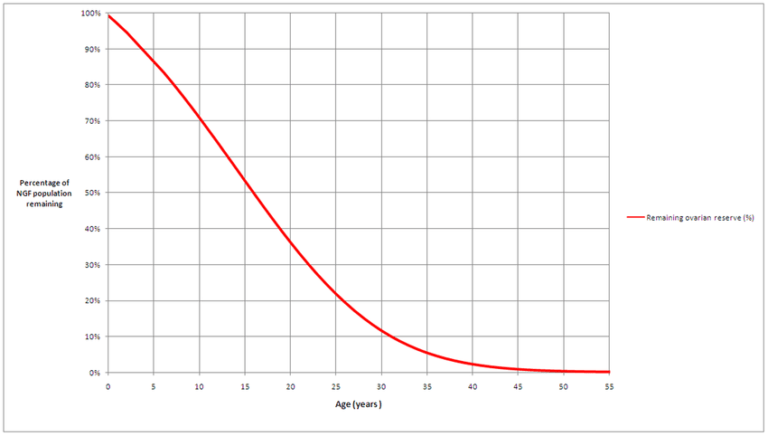
Women are born with all their eggs.
Over time:
- Egg number declines
- Egg quality declines
- Hormonal patterns change
This is biological. Not personal.
Understanding where you stand allows informed decisions.
What Hormones Are Tested for Egg Reserve?
A proper ovarian reserve assessment includes:
- AMH (Anti-Müllerian Hormone)
- FSH (Follicle Stimulating Hormone)
- LH (Luteinising Hormone)
- Oestradiol
- Prolactin
- Thyroid markers (TSH ± FT4)
AMH is currently the most stable marker of egg reserve.
However, a full hormone panel gives a more complete picture.
At MDC, our Egg Reserve Hormone Panel includes structured assessment beyond AMH alone.
AMH Ovarian Reserve Test: What Does It Mean?
AMH reflects the number of small follicles remaining in the ovaries.
Higher AMH usually indicates:
- Higher ovarian reserve
Lower AMH may indicate:
- Reduced ovarian reserve
However, AMH does not directly measure egg quality. It measures quantity, not viability.
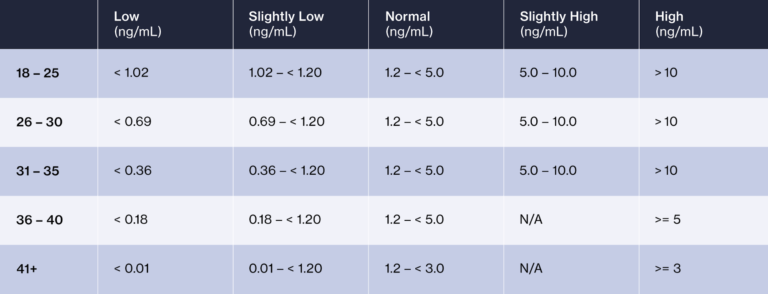
What Is a Normal AMH Range?
Ranges vary slightly between laboratories.
Generally:
- High reserve: above 25 pmol/L
- Average reserve: 10–25 pmol/L
- Low reserve: below 10 pmol/L
Interpretation must always consider age.
A “low” AMH at 42 is very different from a low AMH at 28.
Ovarian Reserve by Age
Egg quantity declines gradually until early 30s.
After 35, decline accelerates.
After 40, fertility decreases more rapidly.
Approximate egg estimates:
- Age 25: ~100,000 eggs remaining
- Age 32: ~70,000 eggs remaining
- Age 37: ~25,000 eggs remaining
- Age 40: significantly reduced
These are estimates, not guarantees. Individual variation is wide.

How Many Eggs Are Left at Age 32?
At 32, many women still have good ovarian reserve. However, decline has begun. Testing at this stage provides valuable planning information. It is proactive, not reactive.
Is FSH or AMH More Important?
AMH is more stable.
FSH fluctuates depending on cycle timing.
FSH is measured on day 2–5 of the cycle.
AMH can be measured at any time.
Both markers together provide better insight.
AMH is generally considered more predictive for ovarian response in IVF.
How to Check Egg Quality in Females
There is no direct blood test for egg quality.
Age remains the strongest predictor.
However, indirect indicators include:
- AMH
- FSH
- Antral follicle count (via ultrasound)
Lifestyle factors also influence quality:
- Smoking
- BMI
- Stress
- Sleep
- Metabolic health
Hormone testing gives the baseline. Lifestyle determines optimisation.
What Is Included in a Full Female Hormone Panel?
At MDC, a comprehensive fertility hormone panel may include:
- AMH
- FSH
- LH
- Oestradiol
- Progesterone
- Prolactin
- Thyroid function
- Vitamin D
- Androgen profile if needed
This gives a structured endocrine overview.
Ovarian Reserve Blood Test vs At-Home Kits
Some online services offer “egg quality test at-home” kits.
These often measure AMH alone.
However:
- No clinical interpretation
- No structured hormone context
- No fertility pathway support
Clinician-led interpretation matters.
Does the NHS Offer AMH Tests?
The NHS may offer AMH testing in certain situations.
However:
- Access varies by region
- GP approval may be required
- Testing may be limited to IVF referral pathways
Many women choose private testing for:
- Speed
- Privacy
- Proactive planning
Can Your GP Order an AMH Test?
Some GPs can request AMH. However, not all do routinely. Private testing provides faster access and clearer reporting.
How Much Does the AMH Test Cost in the UK?
Private AMH testing in London typically ranges between:
£70 – £150 for AMH alone.
A full fertility hormone panel costs more but provides greater insight. At MDC, our Egg Reserve Hormone Panel is structured for accuracy and clarity.
Is 37 Too Late for IVF?
No.
Many women conceive successfully at 37. However, ovarian reserve testing becomes more important. Clarity reduces uncertainty. Testing allows realistic expectations and informed decisions.
High Ovarian Reserve: Is That Always Good?
High AMH may indicate strong reserve.
However, very high AMH can be associated with:
- Polycystic ovarian syndrome (PCOS)
Symptoms of high ovarian reserve linked to PCOS may include:
- Irregular periods
- Acne
- Excess hair growth
Interpretation is essential.
Why Early Fertility Testing Matters
Women in London increasingly delay childbearing.
Career. Financial stability. Personal choice. However, biology does not pause. Testing at 30–35 provides options. Testing at 38 – 40 provides urgency. The difference is planning.
Why Choose Marylebone Diagnostic Centre?
We combine laboratory precision with discreet care.
Our Differentiators:
- Results within 24–42 hours
- On-site consultant review
- Private suites
- Discreet & confidential care
- CQC-accredited and aligned with Marylebone High Standard
- Optional teleconsultations
MDC uses QCMD quality assurance to ensure all test results meet the Marylebone High Standard.
Visual Guide to AMH & Ovarian Reserve


1. What is a good AMH level?
It depends on age. Generally 10–25 pmol/L is considered average in reproductive years.2. Can AMH predict pregnancy?
AMH predicts ovarian response, not egg quality or guaranteed pregnancy.3. Should I test AMH at 32?
Testing at 32 can provide useful planning information and reassurance.4. Does a low AMH mean I cannot conceive?
No. Many women with low AMH conceive naturally. It reflects quantity, not certainty.5. How quickly will I receive results?
Most fertility hormone results are available within 24–42 hours.Book Your AMH & Ovarian Reserve Test in London
📍 Marylebone Diagnostic Centre
73 Baker Street, London W1U 6RD
5-minute walk from Baker Street tube
📞 +44 7495 970109
🕒 Monday–Saturday, 8:00–16:00
Private fertility testing in London with rapid results and personalised interpretation.