MDC CLINICAL INSIGHTS · NOVEMBER 2026
When Antibiotics Stop Working: Understanding a Growing Global Health Threat
A urinary infection that keeps returning. An antibiotic that no longer seems to help. A laboratory report showing bacteria resistant to treatment.
These situations highlight why antimicrobial resistance matters — and why appropriate diagnostic testing is an important part of modern healthcare.
EXPLORE URINE CULTURE TESTING ASK MDCQUICK ANSWER
What Is Antimicrobial Resistance?
Antimicrobial resistance (AMR) happens when microorganisms such as bacteria, fungi, viruses and parasites develop the ability to survive medicines that previously worked against them.
Antibiotic resistance is one type of AMR. It occurs when bacteria become resistant to antibiotics, making some infections harder to treat.
Appropriate laboratory testing, including bacterial culture and antibiotic susceptibility testing when indicated, can help clinicians identify infections and select suitable treatment. At Marylebone Diagnostic Centre in London, patients can arrange selected urine and other microbiology investigations directly.
GLOBAL HEALTH UPDATE
Why Is Antimicrobial Resistance in the News in November 2026?
New reporting from the World Health Organization and recent research underline the difficulty of controlling drug-resistant infections.
WHO UPDATE · 16 NOVEMBER 2026
Countries Have Plans — But Funding Remains a Problem
Reuters reported that 173 of 183 surveyed countries had national AMR action plans, but only 42 reported that their plans were financed and implemented.
READ WHO NEWS COVERAGE →RESEARCH · NOVEMBER 2026
Resistance May Be More Complex Than a Single Gene
A study in Frontiers in Microbiology explored variation in bacterial minimum inhibitory concentration distributions, suggesting that population-level resistance patterns contain information not fully explained by catalogued resistance genes.
READ THE RESEARCH →AUSTRALIA · 17 NOVEMBER 2026
Doctors Warn About the Future of Routine Medical Care
ABC News reported concerns from Australian doctors that increasing resistance could make routine infections and medical procedures more dangerous.
READ THE REPORT →Antimicrobial Resistance: The Numbers Behind the Headlines
1 in 6
Laboratory-confirmed bacterial infections globally were reported resistant to antibiotic treatment in WHO surveillance data.
42 / 183
Surveyed countries reported funded and implemented national AMR action plans in 2026.
39 million+
Projected global deaths attributable to bacterial AMR over 2025–2050 if current trends continue — a forecast, not an observed death count.
Sources: WHO reporting summarised by Reuters, 16 November 2026; global bacterial AMR burden projections. Figures represent different datasets and measures.
How Do Bacteria Become Resistant to Antibiotics?
Bacteria can develop resistance through genetic mutations or by acquiring resistance genes from other bacteria. Antibiotic exposure can favour resistant bacteria because susceptible bacteria are killed or inhibited while resistant organisms survive.
1. Bacteria Are Present
A bacterial population may contain organisms with different levels of antibiotic susceptibility.
2. Antibiotic Pressure
When an antibiotic is used, susceptible bacteria may be inhibited while resistant organisms are more likely to survive.
3. Resistant Bacteria Persist
Surviving organisms may multiply or spread. Resistance genes can also move between bacteria.
Resistance can emerge naturally, but unnecessary or inappropriate antibiotic use increases selection pressure. Resistant infections can also occur in people who have used antibiotics correctly or have never taken them.
Important: The bacteria become resistant — not the patient’s body.
New Research: Why Antibiotic Resistance Is More Complicated Than It Looks
A November 2026 paper titled A phenotypic state variable for antimicrobial resistance: MIC-distribution entropy exposes population heterogeneity and phenotypically quiet genomic reservoirs investigated patterns in minimum inhibitory concentration (MIC) data.
An MIC is the lowest concentration of an antimicrobial that inhibits visible bacterial growth under standardised laboratory conditions.
What Does This Mean in Simple Terms?
Imagine two groups of bacteria. Both may have similar overall resistance classifications, but one group contains a wider range of susceptibility levels.
Researchers examined whether measuring that variation could reveal information missed by traditional classifications and known resistance-gene counts.
The findings are relevant to surveillance research, but the proposed entropy measure is not an established routine diagnostic test and should not be presented as a service currently offered by MDC.
The practical message is that microbiology involves more than simply detecting a bacterial species. When clinically indicated, laboratories also investigate how organisms respond to antimicrobial agents.
Antibiotic Resistance: A Timeline of Important Developments
Alexander Fleming discovers penicillin, helping establish the foundations of modern antibiotic treatment.
Penicillin enters wider medical use, while resistant bacteria demonstrate that antibiotic effectiveness cannot be taken for granted.
The World Health Assembly adopts a global action plan to address antimicrobial resistance.
Countries make new commitments to reduce AMR-related deaths and strengthen surveillance, infection prevention and access to appropriate treatment.
New international reporting shows improved national planning, but persistent gaps in funding and implementation.
Governments aim to meet agreed goals for reducing AMR and strengthening prevention, diagnostics and treatment systems.
What Is Culture and Antibiotic Sensitivity Testing?
Culture and susceptibility testing can help clinicians investigate certain suspected bacterial infections.
Culture
A laboratory attempts to grow microorganisms from a clinical sample and identify significant bacterial growth.
Identification
When clinically significant growth is present, the laboratory identifies the organism using appropriate methods.
Susceptibility Testing
Where indicated, the organism is tested against selected antibiotics to help guide treatment decisions.
A susceptibility report may classify an organism as susceptible or resistant under recognised laboratory interpretation standards. The result must be considered alongside the infection site, antibiotic exposure, patient factors and clinical condition.
Not every sample grows bacteria, not every positive culture requires antibiotics, and not every infection requires a culture.
MARYLEBONE DIAGNOSTIC CENTRE
How Can MDC Help Patients Investigating an Infection?
MDC offers several diagnostic services relevant to urinary, genital and reproductive health. These tests serve different purposes and should be selected according to symptoms and clinical history.
URINARY INFECTION INVESTIGATION
Urine Analysis, Microscopy & Culture
£99
Investigates urine abnormalities and bacterial growth. Susceptibility testing may be performed when indicated to help guide antibiotic treatment.
Published turnaround: 3–5 working days.
BOOK URINE CULTUREMALE REPRODUCTIVE HEALTH
Semen Culture & Sensitivity
£99
Can help investigate selected suspected bacterial infections affecting male reproductive health when clinically appropriate.
Typical turnaround: 3–5 working days.
ENQUIRE / BOOK NOWSEXUAL HEALTH
Sexual Health Testing
Some sexually transmitted infections require specific PCR or blood tests rather than routine bacterial culture.
MDC offers selected STI tests and broader sexual health panels, including Advanced Sexual Health screening.
EXPLORE STI TESTINGDo You Need a Urine Culture or Infection Assessment?
You can arrange selected laboratory tests directly at MDC without a GP referral. Doctor assessment and treatment discussions can also be arranged when appropriate.
VIEW URINE TESTS ASK MDCFive Ways Patients Can Help Reduce Antibiotic Resistance
1. Avoid Antibiotics for Viral Illnesses
Antibiotics do not treat viral infections such as colds and flu.
2. Follow Prescribing Instructions
Take antibiotics exactly as prescribed. Do not change or stop treatment without appropriate advice.
3. Do Not Share Leftover Antibiotics
A medicine prescribed for another person or infection may be ineffective or unsafe.
4. Use Testing When Appropriate
Clinically indicated diagnostic tests can help distinguish causes of symptoms and guide treatment.
5. Prevent Infections
Hand hygiene, recommended vaccination, safer sex and good infection-control practices reduce infection risk.
When Should You Seek Urgent Medical Help?
Do not wait for routine culture results if you are seriously unwell. Fever with flank pain, shaking chills, persistent vomiting, worsening infection symptoms or signs of sepsis require prompt medical assessment.
Severe confusion, difficulty breathing, collapse or rapidly deteriorating health require emergency help. In the UK, call 999 for an emergency or NHS 111 for urgent non-emergency advice.
Antibiotic Resistance — Quick Patient Flashcards
Does antibiotic resistance mean my body is resistant?
No. It means the microorganisms have developed mechanisms that reduce the effectiveness of certain medicines.
Can a urine test identify resistant bacteria?
A urine culture with susceptibility testing may identify bacteria and help assess which antibiotics could be effective, when testing is indicated.
Does every UTI need antibiotics?
No. Treatment depends on symptoms, patient factors and clinical assessment. Some patients need prompt antibiotics; others may be managed differently.
Can an STI PCR test show antibiotic resistance?
Not necessarily. Routine PCR tests usually detect specific organisms. Resistance testing requires a suitable specialised assay or culture where available.
Can I book a urine culture without a GP referral?
Yes. MDC offers direct booking for private urine testing at 73 Baker Street, London.
How long does a urine culture take?
MDC’s published turnaround for urine analysis, microscopy and culture is generally 3–5 working days.
Frequently Asked Questions About Antimicrobial Resistance
What is the difference between antibiotic resistance and antimicrobial resistance?
Antibiotic resistance refers specifically to bacteria becoming resistant to antibiotics. Antimicrobial resistance is broader and includes resistance involving medicines used against bacteria, viruses, fungi and parasites.
Why are antibiotics becoming less effective?
Resistance develops through microbial evolution and the spread of resistant organisms. Inappropriate or excessive antibiotic use can increase selection pressure, allowing resistant bacteria to survive and spread.
Can antibiotic resistance be reversed?
Resistance patterns may change over time, but there is no simple method to reverse resistance in an individual infection. Prevention, surveillance, appropriate prescribing and development of new treatments are all important.
What is the difference between urine analysis and urine culture?
Urine analysis examines markers such as blood, protein, leukocytes and nitrites. Urine culture attempts to grow and identify bacteria. Susceptibility testing may be performed when clinically significant organisms are isolated.
Can I have antibiotic susceptibility testing at MDC?
MDC offers urine analysis, microscopy and culture, as well as semen culture and sensitivity. Whether susceptibility testing is appropriate or possible depends on the specimen, laboratory findings and clinical circumstances.
What if my infection does not improve after antibiotics?
Contact a clinician for reassessment rather than taking additional or leftover antibiotics yourself. A different diagnosis, resistant organism, complication or other factor may need to be considered.
Should I get a culture before taking antibiotics?
Sometimes, especially in recurrent, complicated or treatment-resistant infections. However, testing is not always necessary and treatment should not be delayed in someone who needs urgent antibiotics. Follow your clinician’s advice.
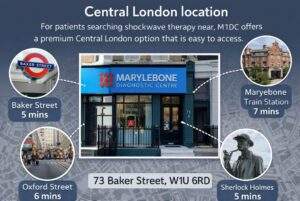
Private Infection Testing in Central London
Marylebone Diagnostic Centre
73 Baker Street, London W1U 6RD
MDC provides private diagnostic services in Marylebone, accessible from Baker Street, Oxford Street, Mayfair, Harley Street and the West End.
TEST APPROPRIATELY · TREAT RESPONSIBLY
Concerned About a Urinary Infection or Recurrent Symptoms?
Marylebone Diagnostic Centre offers private urine culture and other diagnostic investigations, with access to clinical assessment and follow-up when appropriate.
73 Baker Street, London W1U 6RD
BOOK URINE TESTING WHATSAPP MDC CALL 020 7724 0540References and Further Reading
- Reuters, 16 November 2026 — WHO antimicrobial resistance progress and 2030 goals
- Ulaganathan SB, Shreya C, Sivashanmugam K. Frontiers in Microbiology (2026) — MIC-distribution entropy
- ABC News, 17 November 2026 — Australian doctors warn about antimicrobial resistance
- World Health Organization — Antimicrobial Resistance
- NICE — Urinary Tract Infection (Lower): Antimicrobial Prescribing
- MDC — Private Urine Tests
Written by Mr Tharb Faisl, Writer / Scientist. Clinical review required before publication. This article is educational and does not replace individual medical advice.