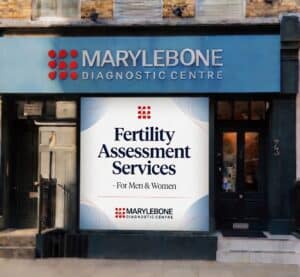

A Complete Guide to Fertility Blood Testing for Both Partners
Author: Dr Lauren Holland, Clinical Lead – Marylebone Diagnostic Centre
Fertility is not just a female issue. It is also not only about age.
In many couples, delays happen because one partner is tested, not both.
Marylebone Couples Fertility Assessment is designed to assess both partners together, using targeted blood tests. This approach saves time and reduces uncertainty and stress.
What Is a Couples Fertility Assessment?
This is a combined fertility blood testing profile for couples. It assesses:
- Female fertility markers
- Male fertility markers
- Hormonal balance
- Metabolic and nutritional factors
It provides clarity before months of waiting or IVF referrals.
Why Test Both Partners Together?
Fertility challenges are shared. Clinical data shows:
- ~40% female-related factors
- ~40% male-related factors
- ~20% combined or unexplained
Testing one partner gives an incomplete picture. Testing together supports:
- Faster answers
- Better planning
- More informed decisions
Female Fertility Blood Tests Explained
Female fertility is influenced by hormones, metabolism, and nutrition. The assessment includes the following key areas:
| Female Fertility Markers | Test | What It Assesses |
|---|---|---|
| AMH | Ovarian reserve | Egg quantity and fertility potential |
| FSH & LH | Egg development and ovulation | Ovulation cycle regulation |
| Oestradiol | Cycle health | Hormonal cycle monitoring |
| Prolactin | Ovulation disruption | Assess ovulatory function |
| Thyroid hormones | Hormone regulation | Cycle and fertility support |
| Iron profile | Egg quality support | Supports reproductive health |
| Vitamins | Hormonal and metabolic support | Supports energy and cycle balance |
Why These Tests Matter
- Low AMH affects planning timelines
- Thyroid imbalance may prevent ovulation
- Iron deficiency affects egg quality
- Hormonal imbalance can disrupt cycles
- Many of these issues are correctable once identified
Male Fertility Blood Tests Explained
Male fertility depends on hormones, metabolism, and overall health. The assessment includes key male markers:
| Male Fertility Markers | Test | Why It Matters |
|---|---|---|
| Testosterone | Sperm production | Supports fertility and libido |
| SHBG | Hormone availability | Testosterone effectiveness |
| FSH & LH | Testicular function | Regulates sperm production |
| Metabolic markers | Sperm quality | Overall reproductive health |
| Inflammation | DNA damage risk | Identifies oxidative stress |
| Nutritional markers | Sperm development | Supports sperm health |
Why Male Blood Testing Is Often Missed
Many men are told semen analysis is enough. However, blood markers influence sperm health long before changes appear in semen results. Blood testing helps explain:
- Poor sperm quality
- Low motility
- DNA fragmentation risk
Fertility Blood Tests vs “Trying Naturally”
Waiting without testing can delay answers. Blood testing helps:
- Identify silent issues
- Optimise health earlier
- Reduce months of uncertainty
It is especially helpful when:
- Trying for 6–12 months
- The female partner is over 30
- There has been miscarriage
- IVF is being considered
Fertility Blood Tests Before IVF
Many IVF clinics request blood tests after referral. However, early testing can be beneficial:
- Better IVF preparation
- Fewer cancelled cycles
- More targeted treatment plans
Blood results also help patients ask informed questions.
When Should Couples Consider Testing?
You may benefit from testing if:
- You have tried for 6–12 months
- One partner is over 30
- There is a history of miscarriage
- You want a fertility baseline
- You plan IVF or assisted conception
Early testing supports earlier action.
How This Assessment Is Different
| Basic fertility checks | Couples Fertility Assessment |
|---|---|
| One partner tested | Both partners tested |
| Limited markers | Multi-system insight |
| Reactive | Preventative |
| Delayed answers | Results in 24 - 42 hours |
What Happens After Testing?
Blood samples are taken at MDC. Results are delivered quickly. You receive:
- Clear results
- Insight into fertility health
- Options for next steps
- Additional tests can be added if needed
Why Choose Marylebone Diagnostic Centre?
- Central London location
- Fast turnaround times
- Consultant-led oversight
- Discreet and private setting
- Clear, patient-friendly reporting
- All results meet the Marylebone High Standard
Our Thoughts: Fertility clarity reduces stress. Testing together supports better decisions.
Book NowMarylebone Diagnostic Centre
📍 73 Baker Street, London W1U 6RD
🚇 5-minute walk from Baker Street tube
🕘 Monday–Saturday, 8:00–16:00
📞 +44 7495 970109
🌐 marylebonediagnosticcentre.com
Results within 24–42 hours depending on the test.
Frequently Asked Questions – Couples Fertility Assessment
The cost of fertility testing in the UK depends on what is included. Basic tests may cost a few hundred pounds. More comprehensive assessments can cost more, especially if testing both partners. Private couples fertility assessments usually include blood tests for hormones, metabolism, and nutrition. Some providers also add semen analysis or scans separately.
The most effective way is to test both partners together. This usually includes:
- Female fertility hormones
- Male fertility hormones
- Thyroid function
- Metabolic and nutritional markers
Testing together helps identify shared or combined factors earlier.
The NHS does not offer routine fertility screening for couples. Testing is usually offered only after:
- A period of trying to conceive
- Referral to a fertility clinic
- Meeting specific eligibility criteria
Even then, testing may be limited to certain markers. Private testing allows couples to check fertility earlier and more comprehensively.
In London, fertility testing is available privately through diagnostic centres and fertility clinics. Private fertility blood tests allow:
- Faster access
- Broader testing
- Preventative insight
Marylebone Diagnostic Centre offers blood-based fertility assessment for couples who want early clarity.
Couples’ fertility testing is available in many UK cities through private providers. The most important factor is not location, but whether both partners are assessed together. Testing both partners provides a clearer fertility picture than single-partner testing.
The NHS does not offer a routine couples fertility test. Testing is usually staged and symptom-led. Male and female partners are often assessed separately and later in the process. Private testing allows couples to assess fertility earlier.
Some home kits test limited markers, such as ovulation or sperm count. However, home tests:
- Do not assess hormones fully
- Do not check thyroid or metabolic health
- Cannot replace blood-based testing
Blood tests provide a more accurate and comprehensive fertility assessment.
Costs vary depending on number of tests, whether one or both partners are tested, and whether follow-up tests are included. Private fertility testing in London can range from a few hundred pounds to over £1,000.
Common fertility blood tests for couples include:
- Women: AMH, FSH & LH, Oestradiol, Thyroid hormones, Iron & vitamins
- Men: Testosterone, FSH & LH, Metabolic markers, Inflammatory markers
Testing these together supports better planning.
Age affects fertility, but 37 is not “too late.” Many women conceive naturally or with support in their late 30s. However, fertility declines with age, so early testing is helpful. Blood tests help guide timelines and next steps more clearly.
Around 1 in 7 couples in the UK experience difficulty conceiving at some point. Fertility challenges are common and often involve both partners. Early testing helps reduce uncertainty.
NHS IVF eligibility varies by local area and clinical criteria. In some regions, having a partner with a child may affect eligibility. Criteria differ between NHS trusts. Private fertility testing can still be done regardless of IVF eligibility.
The best fertility test is one that:
- Tests both partners
- Includes hormone, thyroid, and metabolic markers
- Provides clear results quickly
Blood-based testing offers more insight than single-marker or home tests.
Yes. Fertility testing is available privately across the UK, including Birmingham. However, couples often travel for providers that offer:
- Comprehensive testing
- Fast turnaround
- Clear reporting
Couples may consider testing if:
- Trying for 6–12 months
- One partner is over 30
- Planning pregnancy soon
- There is a history of miscarriage
- IVF is being considered
Early testing supports earlier decisions.