
Modern longevity medicine is no longer focused on simply living longer-it aims to maximise health span, the number of years spent free from chronic disease. Scientific research consistently shows that many of the diseases associated with ageing develop silently over many years before symptoms appear.
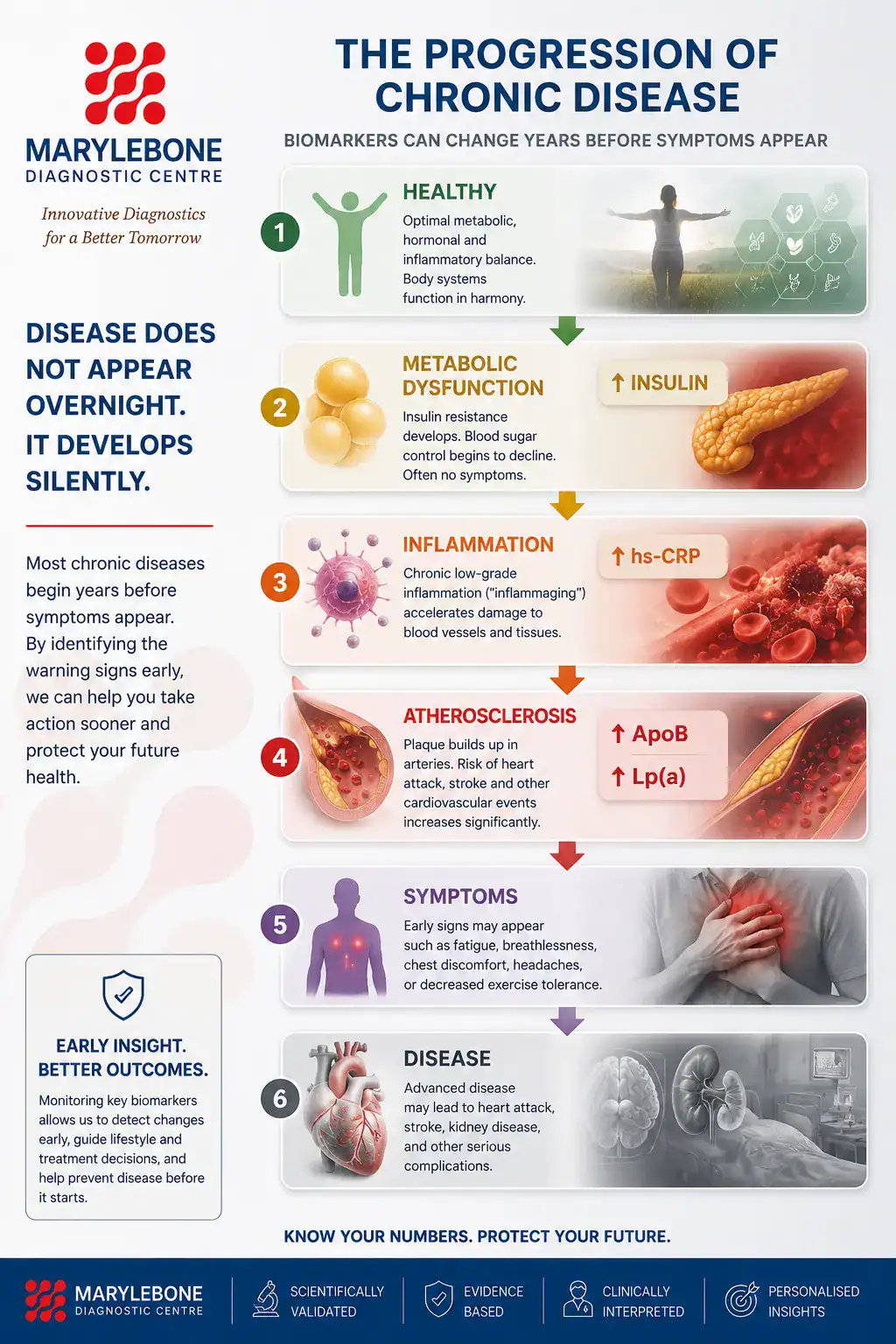
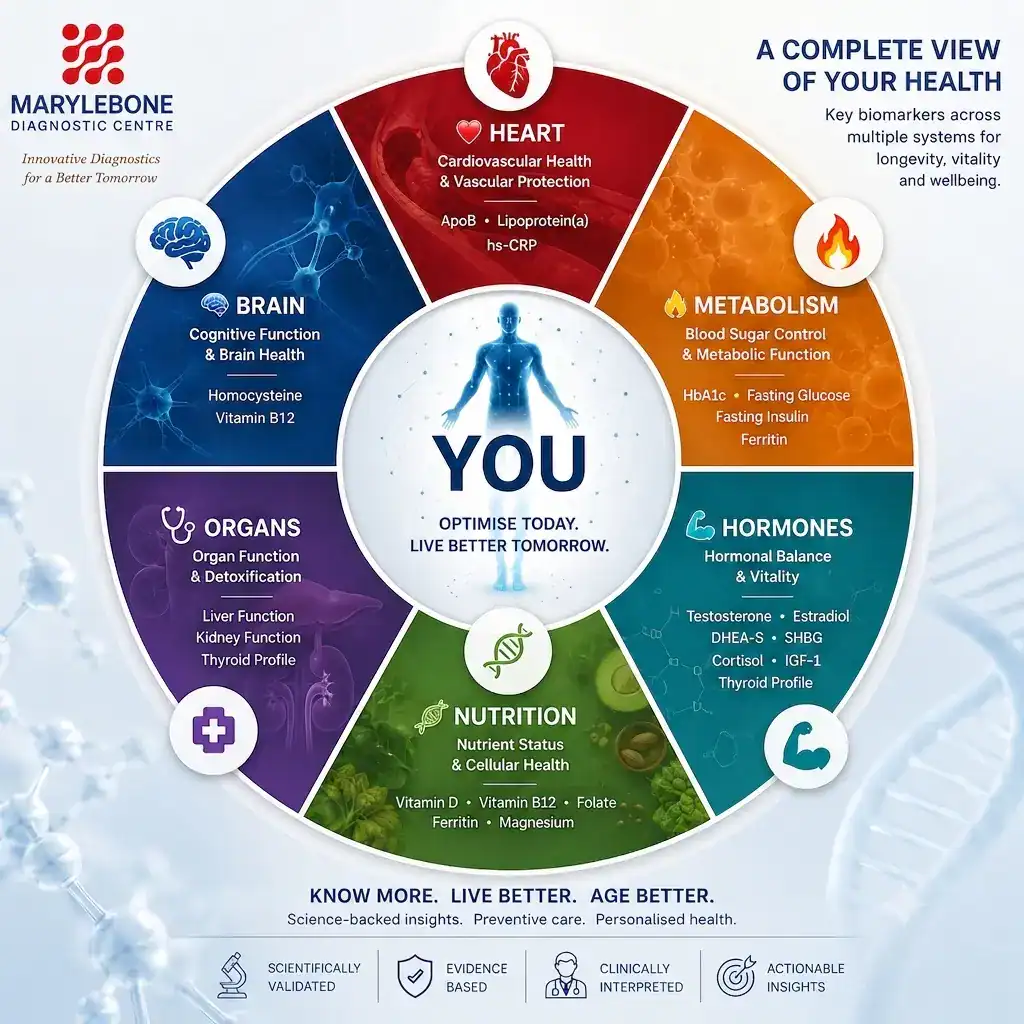
The MDC Longevity Advanced Blood Profile combines some of the most clinically valuable biomarkers currently available to assess cardiovascular risk, inflammation, metabolic health, hormonal balance, nutritional status and organ function. Rather than looking at one system in isolation, this profile provides a broad picture of the biological processes associated with ageing.
What's Included
Apolipoprotein B (ApoB)
What it measures
ApoB measures the number of cholesterol-containing particles capable of entering artery walls and forming plaque.
Why it matters
Research now suggests ApoB is one of the strongest predictors of cardiovascular disease, often outperforming LDL cholesterol alone.
Elevated ApoB is associated with:
- Coronary artery disease
- Heart attacks
- Stroke
- Atherosclerosis
Many preventive cardiologists now consider ApoB one of the most important lipid markers.
Lipoprotein(a) — Lp(a)
What it measures
Lp(a) is a genetically inherited lipoprotein that significantly increases cardiovascular risk.
Why it matters
High Lp(a) levels increase the likelihood of:
- Heart attack
- Stroke
- Aortic valve disease
- Early coronary artery disease
Unlike cholesterol, lifestyle changes have very little effect on Lp(a), making early detection particularly valuable.
Current international guidelines recommend measuring Lp(a) at least once in adulthood.
High-Sensitivity C-Reactive Protein (hs-CRP)
What it measures
hs-CRP detects very low levels of inflammation throughout the body.
Why it matters
Chronic low-grade inflammation ("inflammaging") is believed to contribute to many age-related diseases including:
- Cardiovascular disease
- Alzheimer's disease
- Diabetes
- Arthritis
- Cancer
Persistent elevation may indicate increased biological ageing.
Homocysteine
What it measures
Homocysteine is an amino acid involved in methylation and cardiovascular health.
Why it matters
Raised homocysteine has been associated with:
- Heart disease
- Stroke
- Cognitive decline
- Dementia
- Poor methylation
Levels may increase due to deficiencies of vitamin B12, folate or vitamin B6.
Fasting Glucose
Measures blood sugar after fasting.
Elevated levels may indicate:
- Prediabetes
- Diabetes
- Insulin resistance
Even mildly elevated glucose over many years may contribute to accelerated ageing.
HbA1c
Measures average blood glucose over approximately three months.
Why it matters
Provides an overview of long-term blood sugar control and identifies:
- Prediabetes
- Diabetes
- Increased cardiovascular risk
Poor glucose control accelerates vascular ageing.
Fasting Insulin
Measures how much insulin the body requires to maintain blood sugar.
Why it matters
High insulin often develops years before diabetes.
It is a key marker for:
- Insulin resistance
- Metabolic syndrome
- Weight gain
- Fatty liver disease
Many longevity specialists consider fasting insulin one of the earliest indicators of declining metabolic health.
Vitamin D
Vitamin D supports:
- Bone health
- Immune regulation
- Muscle strength
- Inflammatory balance
Low vitamin D has been associated with increased risk of:
- Osteoporosis
- Falls
- Autoimmune disease
- Cardiovascular disease
Vitamin B12
Essential for:
- Nerve function
- DNA synthesis
- Red blood cell production
- Brain health
Deficiency may cause:
- Fatigue
- Memory problems
- Neuropathy
- Anaemia
Folate
Works alongside B12 in:
- DNA repair
- Cell division
- Methylation
- Red blood cell production
Low folate may contribute to elevated homocysteine.
Ferritin
Measures stored iron.
Both low and excessively high ferritin can affect health.
Abnormal levels may contribute to:
- Fatigue
- Iron deficiency
- Iron overload
- Chronic inflammation
Magnesium
Magnesium is involved in over 300 enzymatic reactions.
Supports:
- Energy production
- Muscle function
- Nervous system
- Heart rhythm
- Blood pressure regulation
Low magnesium is common in modern diets.
Testosterone
Supports:
- Muscle mass
- Bone density
- Libido
- Energy
- Mood
Low testosterone has been associated with reduced physical performance and metabolic dysfunction in both men and, in different physiological ranges, women.
Estradiol (Oestradiol)
The primary biologically active form of oestrogen.
Important for:
- Bone health
- Cardiovascular health
- Reproductive function
- Brain function
Abnormal levels may contribute to hormonal symptoms and changes associated with ageing.
DHEA-S
Produced by the adrenal glands.
Acts as a precursor for several sex hormones.
Levels naturally decline with age.
Research continues to explore its role in healthy ageing, although supplementation remains an area of ongoing investigation.
Sex Hormone Binding Globulin (SHBG)
SHBG regulates how much testosterone and oestrogen are biologically available.
Abnormal SHBG may affect hormone balance even when total hormone levels appear normal.
Cortisol
The body's primary stress hormone.
Chronically abnormal cortisol patterns may contribute to:
- Sleep disturbance
- Weight gain
- Fatigue
- Blood sugar abnormalities
- Reduced immune function
Insulin-like Growth Factor-1 (IGF-1)
IGF-1 reflects activity within the growth hormone axis.
It plays an important role in:
- Tissue repair
- Muscle maintenance
- Bone health
- Cellular growth
Both unusually high and unusually low levels have been associated with health risks, and interpretation depends on age, clinical context, and other findings.
Comprehensive Thyroid Profile
Typically includes:
- TSH
- Free T4
- Free T3
The thyroid regulates:
- Metabolism
- Energy production
- Body temperature
- Heart rate
- Weight regulation
Thyroid disorders commonly cause fatigue and reduced quality of life.
Renal Function Assessment
Includes markers such as:
Urea, Creatinine, Sodium, Potassium, e-GFR, Chloride, Bicarbonate
Healthy kidneys are essential for:
- Waste removal
- Blood pressure regulation
- Fluid balance
- Medication clearance
Reduced kidney function may develop without symptoms.
Liver Function Profile
Typically includes:
Total Protein, ALT, AST, ALP, GGT, Albumin, Globulin, A/G Ratio, Bilirubin Total
The liver performs hundreds of vital functions including:
- Detoxification
- Protein synthesis
- Nutrient metabolism
- Cholesterol production
- Drug metabolism
Abnormal liver markers may indicate inflammation, fatty liver disease, medication effects or other hepatic conditions.
Why Choose the MDC Longevity Advanced Blood Profile?
This profile is designed for individuals who wish to take a proactive, evidence-based approach to their long-term health. By combining biomarkers linked to cardiovascular disease, metabolic function, inflammation, hormonal balance, nutritional status and organ health, it provides a broad assessment of biological processes associated with healthy ageing.
This profile may be suitable for individuals who wish to:
- Assess their current health beyond routine blood tests
- Identify potentially modifiable cardiovascular risk factors
- Evaluate metabolic health and insulin resistance
- Monitor chronic inflammation
- Optimise vitamin and mineral status
- Review hormone balance as part of healthy ageing
- Establish a baseline for long-term health monitoring
- Support informed lifestyle and clinical decision-making in partnership with a healthcare professional
The Science Behind Longevity Testing
Ageing is influenced by a combination of genetics, lifestyle, environment and metabolism. While no blood test can predict lifespan, a growing body of research shows that certain biomarkers are associated with the biological processes underlying age-related disease. Monitoring these markers can help identify risk factors earlier and guide evidence-based interventions.
The MDC Longevity Advanced Blood Profile brings together biomarkers supported by current scientific evidence and clinical practice. Results should always be interpreted within the context of an individual's medical history, examination and overall health by a qualified healthcare professional. It is intended to support preventive healthcare and should not be used as a standalone diagnostic tool.
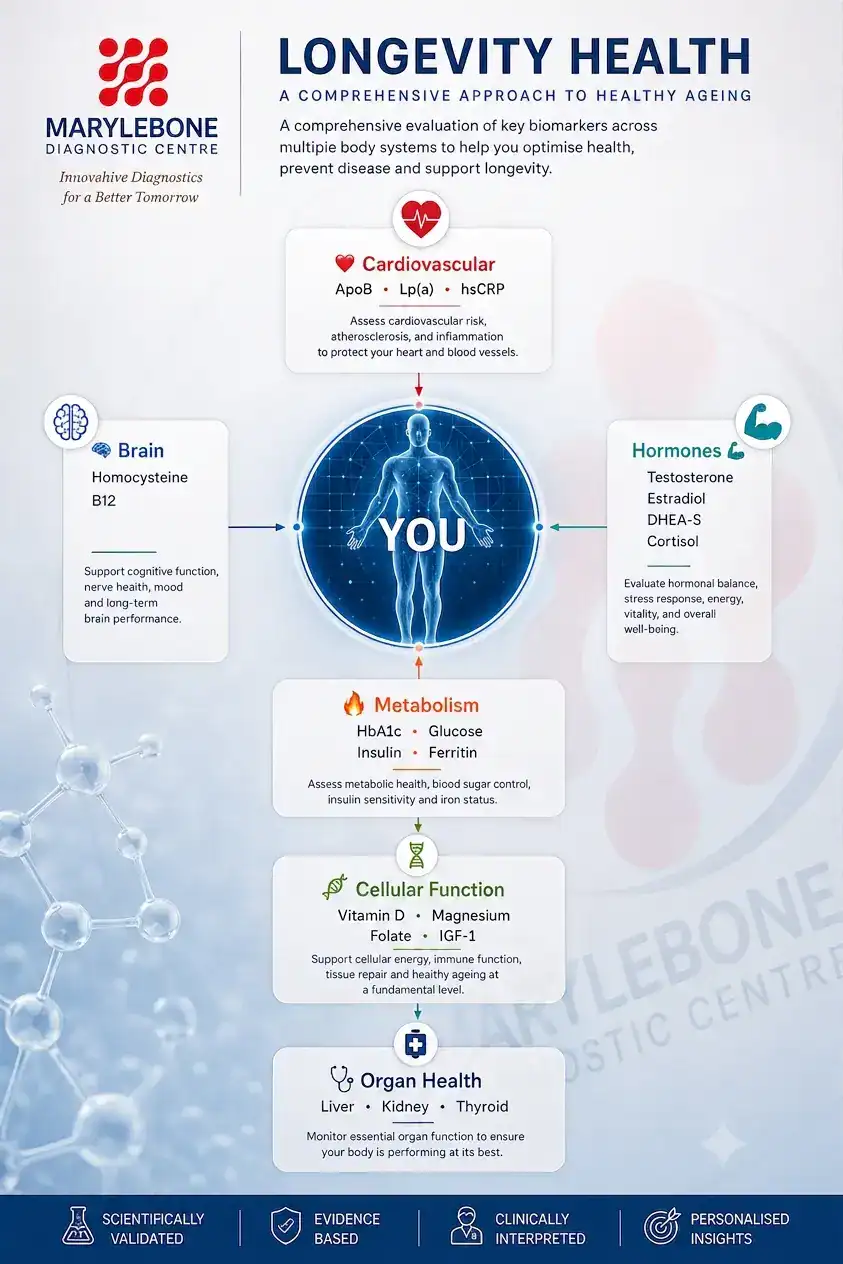
This profile is intended to support preventive healthcare and should not be used as a standalone diagnostic tool.
Book the Longevity Advanced Blood Profile
Take a proactive, evidence-based approach to your long-term health with the MDC Longevity Advanced Blood Profile — £675, results within 2 working days.
Book Now
