
HbA1c Levels Chart UK: What Do Your Blood Sugar Results Mean?
Have you received an HbA1c blood test result and wondered whether it is normal?
Perhaps your result is 39, 42, 45, 48 or 53 mmol/mol, and you want to know what that means. An HbA1c blood test helps show your average blood glucose exposure over approximately the previous two to three months.
At Marylebone Diagnostic Centre (MDC), we provide private HbA1c testing and wider blood health assessments at our Baker Street clinic in London.
Quick Answer: What Is a Normal HbA1c Level in the UK?
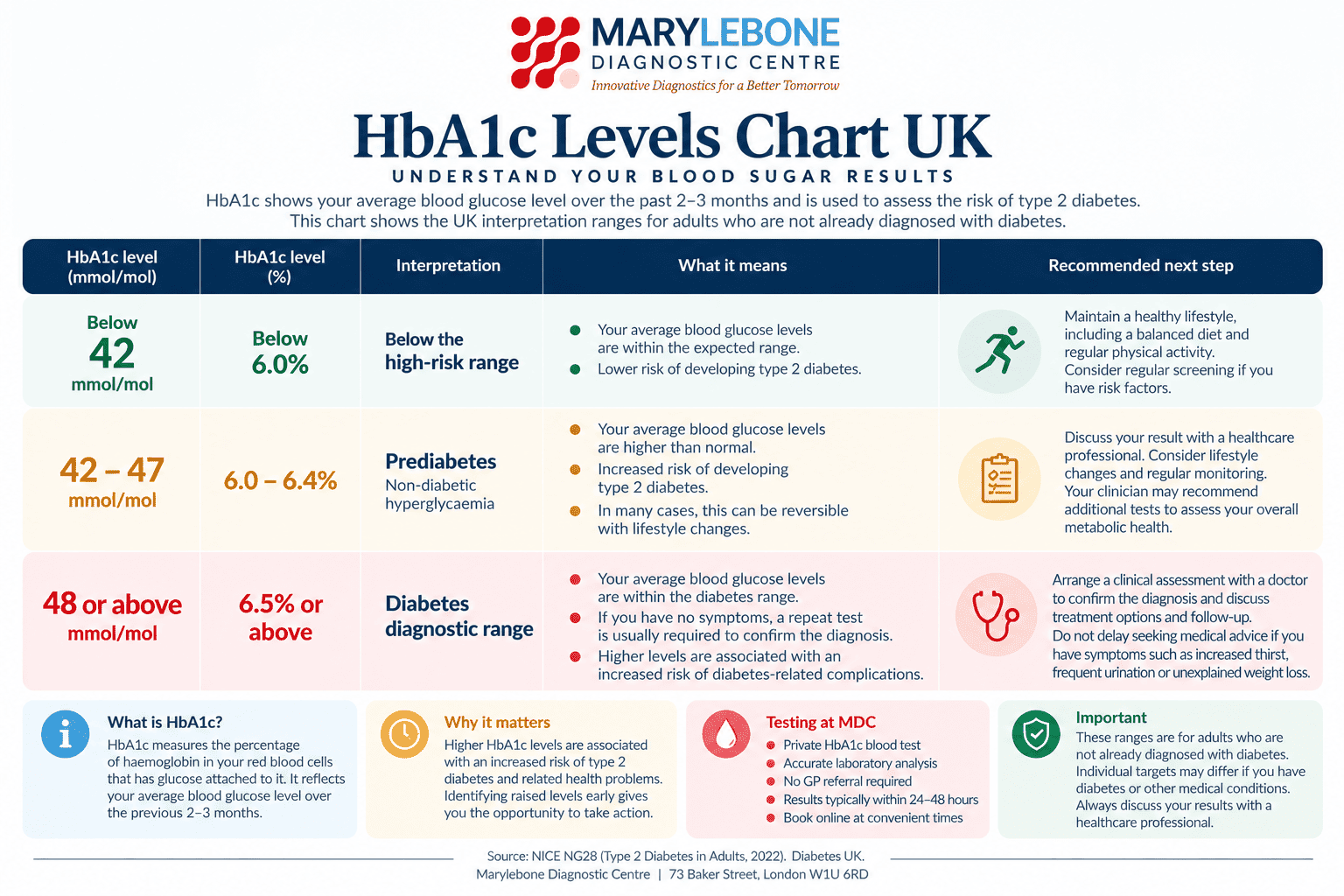
For adults who are not already diagnosed with diabetes, the usual UK HbA1c interpretation is:
- Below 42 mmol/mol (below 6.0%): Below the high-risk range.
- 42–47 mmol/mol (6.0–6.4%): Non-diabetic hyperglycaemia, often called prediabetes.
- 48 mmol/mol or above (6.5% or above): Within the diagnostic range for diabetes.
These thresholds are used when HbA1c is suitable for diagnosis. If you have no symptoms, a result in the diabetes range generally needs confirmation with a repeat test.
For someone already living with diabetes, individual treatment targets may be different.
MDC HbA1c Levels Chart UK
UK interpretation ranges for adults who are not already diagnosed with diabetes.
| HbA1c (mmol/mol) | HbA1c (%) | Interpretation |
|---|---|---|
| Below 42 | Below 6.0% | Below the high-risk range |
| 42–47 | 6.0–6.4% | Prediabetes / non-diabetic hyperglycaemia |
| 48 or above | 6.5% or above | Diabetes diagnostic range |
Clinical note: These are diagnostic interpretation thresholds, not universal HbA1c treatment targets.
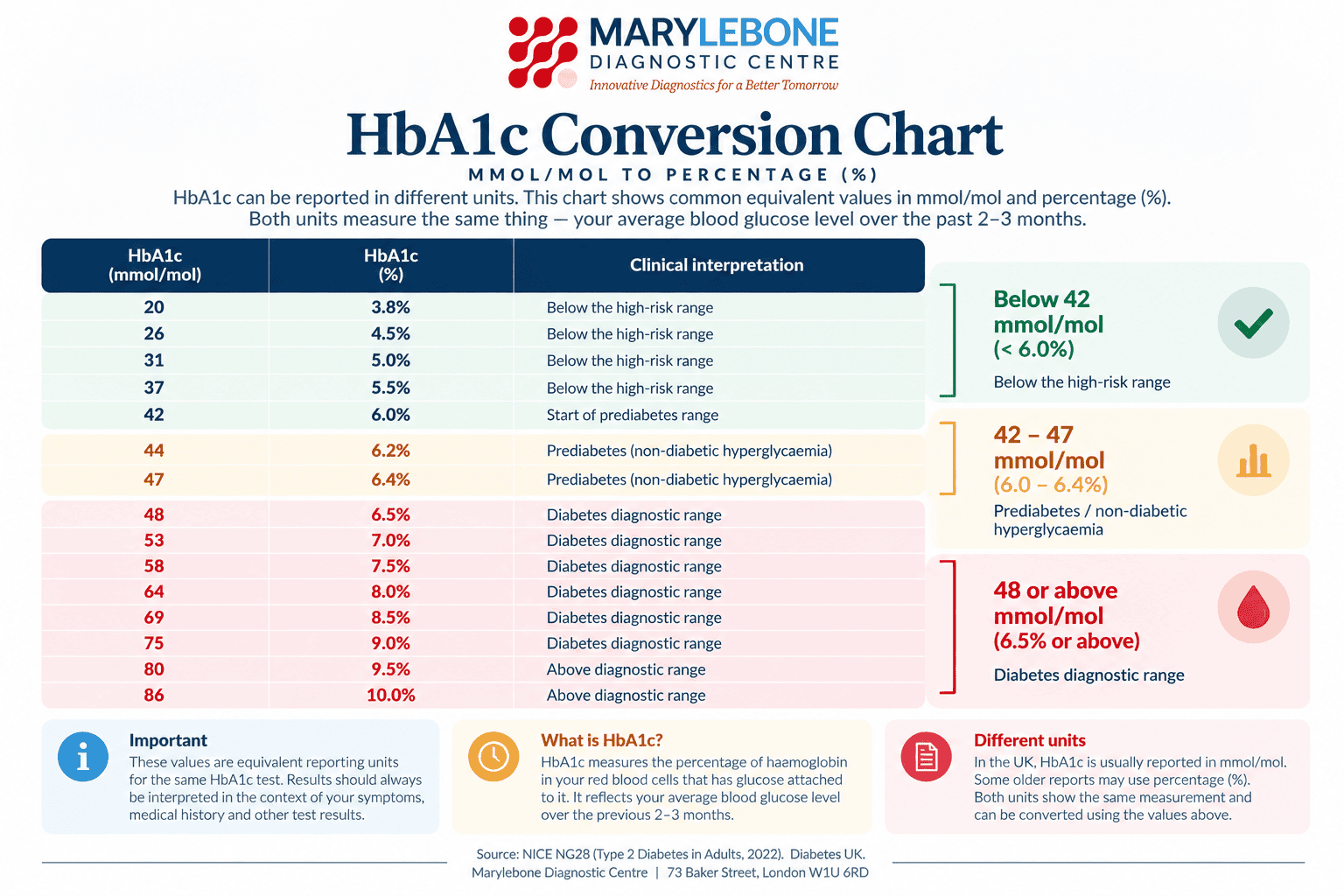
HbA1c Conversion Chart: mmol/mol to Percentage
Some laboratory reports use mmol/mol, while older results and international resources may use percentages. These are equivalent reporting units, not different tests.
| HbA1c mmol/mol | Approximate HbA1c % |
|---|---|
| 31 | 5.0% |
| 37 | 5.5% |
| 42 | 6.0% |
| 48 | 6.5% |
| 53 | 7.0% |
| 58 | 7.5% |
| 64 | 8.0% |
| 69 | 8.5% |
| 75 | 9.0% |
What Does Your HbA1c Result Mean?
What does HbA1c 39 mean?
An HbA1c of 39 mmol/mol is below the UK high-risk range.
However, it does not rule out every glucose-related problem, particularly where HbA1c may be unreliable.
What does HbA1c 42 mean?
A result of 42 mmol/mol is at the beginning of the non-diabetic hyperglycaemia range.
It indicates an increased risk of developing type 2 diabetes.
What does HbA1c 45 mean?
A result of 45 mmol/mol is within the prediabetes range.
This is an opportunity to discuss risk factors and appropriate steps to reduce the likelihood of progression.
What does HbA1c 48 mean?
A result of 48 mmol/mol reaches the HbA1c diagnostic threshold for diabetes.
If you have no symptoms, confirmation is generally required before a diagnosis is made.
What does HbA1c 53 mean?
A result of 53 mmol/mol is above the diagnostic threshold for diabetes.
If you already have diabetes, its meaning depends on your agreed treatment target and clinical circumstances.
What Is an HbA1c Blood Test?
HbA1c measures the proportion of haemoglobin in red blood cells that has glucose attached to it. Because red blood cells circulate for several months, HbA1c provides an indication of longer-term blood glucose exposure.
It is commonly used to:
- Assess risk of type 2 diabetes.
- Help diagnose type 2 diabetes when appropriate.
- Monitor glucose control in people already diagnosed with diabetes.
- Support discussions about treatment and lifestyle changes.
HbA1c does not measure your blood glucose at the exact moment your sample is taken.
What Is Prediabetes?
Prediabetes is a common term for blood glucose levels that are above the usual range but below the diagnostic threshold for diabetes.
In the UK, HbA1c between 42 and 47 mmol/mol is described as non-diabetic hyperglycaemia. It does not mean that diabetes is inevitable.
Some people can reduce their risk through changes in weight, physical activity, nutrition and management of other risk factors.
What should I do if my HbA1c is 42–47?
Discuss the result with a healthcare professional, particularly if you have a family history of diabetes, excess weight, high blood pressure or other risk factors.
A clinician can advise whether repeat testing, a wider metabolic assessment or a structured diabetes-prevention programme would be appropriate.
What Happens If My HbA1c Is 48 or Higher?
An HbA1c result of 48 mmol/mol or above falls within the diagnostic range for diabetes. However, diagnosis should follow the appropriate clinical pathway. If you have no symptoms, a repeat confirmatory test is generally needed.
If you have symptoms such as excessive thirst, frequent urination, unexplained weight loss or marked tiredness, seek timely medical assessment.
Do not wait for a routine HbA1c appointment if you are acutely unwell. Vomiting, abdominal pain, deep or rapid breathing, drowsiness or confusion alongside suspected high blood glucose require urgent medical attention.
Can HbA1c diagnose type 1 diabetes?
HbA1c should not be used alone to diagnose suspected type 1 diabetes. If type 1 diabetes is suspected, urgent assessment with appropriate glucose and ketone testing is important.
Is HbA1c the Same as a Blood Glucose Test?
No. HbA1c reflects longer-term glucose exposure. Blood glucose measures glucose at the time of testing. Both may be useful, but they answer different clinical questions.
A clinician may recommend fasting plasma glucose or another appropriate test if HbA1c is unsuitable or the results do not match your symptoms.
Can HbA1c Results Be Misleading?
Yes, in certain circumstances. HbA1c can be less reliable when red blood cell lifespan or haemoglobin is affected.
Examples include some forms of anaemia, haemoglobin variants, recent blood loss or transfusion, and certain medical conditions. HbA1c is also not the preferred diagnostic test in some circumstances, including pregnancy.
Tell your clinician if you have a condition that may affect the result.
What Is a Good HbA1c Level If You Already Have Diabetes?
This is different from the diagnostic chart. The information below applies to people already diagnosed with diabetes, not to the diagnostic thresholds above.
People already diagnosed with diabetes may have individual HbA1c treatment targets based on their type of diabetes, medication, risk of low blood glucose, age and other medical circumstances.
For many adults with type 2 diabetes, NICE guidance discusses targets around 48 or 53 mmol/mol depending on treatment and hypoglycaemia risk. However, your clinician may recommend a different target.
How Can I Lower My HbA1c?
The right approach depends on whether you have prediabetes, diagnosed diabetes or another cause of elevated glucose. Possible steps include:
- Following an appropriate balanced eating plan.
- Increasing physical activity where suitable.
- Managing excess weight where relevant.
- Improving sleep and addressing other health concerns.
- Taking prescribed medication as directed.
- Attending follow-up appointments and repeat testing.
Do not stop or change diabetes medication based on an online chart.
For some patients, medication or structured clinical support may be needed.
When Should HbA1c Be Repeated?
The appropriate interval depends on your result and circumstances.
- Someone with an elevated result being assessed for diabetes may need prompt confirmation.
- Someone with prediabetes may need periodic reassessment according to clinical risk.
- People with diagnosed diabetes may require more frequent testing, particularly after treatment changes.
A clinician should advise on the timing rather than applying the same interval to everyone.
Which MDC Service Is Right for You?
“I want to know my average blood sugar.”
HbA1c Blood Test
For patients wanting an HbA1c measurement or following clinical advice to repeat the test.
“I want a wider check of my metabolic health.”
Relevant Blood Health Profile
A clinician may recommend additional testing, such as lipids, kidney function or other markers depending on your medical history.
Frequently Asked Questions About HbA1c
What is a normal HbA1c level in the UK?
Is HbA1c 40 normal?
Is HbA1c 42 prediabetes?
Is HbA1c 44 dangerous?
Is HbA1c 47 diabetes?
Is HbA1c 48 diabetes?
Is HbA1c 53 high?
What is HbA1c 6.5% in mmol/mol?
Can HbA1c detect diabetes early?
Can I have diabetes with a normal HbA1c?
Do I need to fast before an HbA1c blood test?
Can stress raise HbA1c?
Can HbA1c improve without medication?
How quickly can HbA1c change?
Does HbA1c increase with age?
Is HbA1c different for men and women?
Can anaemia affect HbA1c?
Can I use HbA1c to monitor type 1 diabetes?
How much does an HbA1c test cost in London?
Where can I book a private HbA1c blood test in London?
Understand Your HbA1c. Take the Right Next Step.
An HbA1c result can help you understand your longer-term blood glucose levels. Whether you are checking your diabetes risk, following up on a previous result or monitoring an existing condition, appropriate testing and interpretation can help you make informed decisions.
Medical References
- NICE. Type 2 Diabetes in Adults: Management (NG28).
- NICE. Type 2 Diabetes: Prevention in People at High Risk (PH38).
- Diabetes UK. What Is HbA1c?
- NHS. Type 2 Diabetes.
Medical note: HbA1c results must be interpreted in the appropriate clinical context. This chart is educational and does not replace medical diagnosis or individual treatment advice.

