HbA1c Levels Chart UK: What Is a Normal HbA1c?
Is your HbA1c 39, 42, 47 or 48 mmol/mol? Find out what your result could mean, when to speak to a doctor and which blood tests can help you understand your diabetes risk.
You have received your blood test results. Your HbA1c is 44 mmol/mol. Is that normal? Does it mean diabetes? And what should you do next? Understanding your HbA1c result can help you take practical steps to protect your long-term health.
What is a normal HbA1c level in the UK?
For most non-pregnant adults being assessed for type 2 diabetes, an HbA1c below 42 mmol/mol (below 6.0%) is below the UK high-risk threshold. 42–47 mmol/mol (6.0–6.4%) indicates an increased risk of type 2 diabetes. 48 mmol/mol or above (6.5% or above) is in the diabetes diagnostic range.
If you have no symptoms, a result in the diabetes range normally needs confirmation with a repeat test. These thresholds are for diagnosis and risk assessment, not treatment targets for everyone already living with diabetes.
HbA1c Levels Chart UK
Use this simple, colour-coded chart to understand what your HbA1c result may mean.
Understand Your HbA1c Result
UK HbA1c Reference Chart
Below the High-Risk Range
Below 6.0%
Below the UK threshold for non-diabetic hyperglycaemia. Your overall risk still depends on other health factors.Increased Diabetes Risk
6.0–6.4%
Often called prediabetes. Clinical follow-up and prevention advice are recommended.Diabetes Diagnostic Range
6.5% or above
Requires clinical interpretation. Confirmation is normally needed when symptoms are absent.What exactly is HbA1c?
HbA1c stands for glycated haemoglobin. It measures how much glucose has attached to haemoglobin inside your red blood cells.
Because red blood cells circulate for several months, the result reflects your average blood sugar over approximately the previous two to three months.
This is different from a glucose test, which measures blood sugar at a particular moment.
HbA1c is useful for identifying people at increased risk of type 2 diabetes and for monitoring blood sugar control in people with established diabetes.
10 questions about HbA1c — answered
Tap each card to reveal the answer.
My HbA1c is 44 mmol/mol. What should I do?
Imagine you are 45 years old. You feel reasonably healthy, but a routine blood test shows HbA1c of 44 mmol/mol.
This does not mean you have diabetes. It means your blood sugar is within the UK increased-risk range.
This is an opportunity to review your health before problems develop.
Useful next steps include:
- Discuss the result with a clinician.
- Review your weight and waist measurement.
- Check blood pressure and cholesterol.
- Increase physical activity where appropriate.
- Review sugary drinks, refined carbohydrates and overall diet.
- Agree a plan for repeat testing.
NICE recommends at least annual blood testing for people confirmed to be at high risk of type 2 diabetes. You may also be eligible for an NHS diabetes prevention programme.
What symptoms might suggest high blood sugar?
Type 2 diabetes can develop gradually. Some people notice no symptoms, while others experience:
Common symptoms
- Feeling unusually thirsty.
- Passing urine more frequently.
- Persistent tiredness.
- Blurred vision.
- Unexplained weight loss.
Other possible signs
- Repeated infections.
- Slow wound healing.
- Genital itching or recurrent thrush.
- Feeling generally unwell.
HbA1c versus fasting glucose: what’s the difference?
| Test | What it measures | Fasting? |
|---|---|---|
| HbA1c | Average blood glucose over roughly 2–3 months. | No fasting needed for the standalone test. |
| Fasting glucose | Blood glucose at the time of sampling after fasting. | Yes, according to the laboratory instructions. |
| Diabetic Profile | HbA1c together with a blood glucose measurement. | MDC currently instructs 8–10 hours of fasting. |
Neither test is ideal in every situation. HbA1c may be unreliable in pregnancy, suspected type 1 diabetes and some conditions affecting red blood cells. A clinician may recommend other glucose tests.
Which MDC blood test should you choose?
You do not necessarily need a large blood test package. The best option depends on the question you want answered.
1. HbA1c Blood Test
A straightforward choice if you want to check your average blood sugar level.
- HbA1c blood measurement.
- No fasting required.
- Blood sample collected at MDC.
- Published turnaround: 1–2 working days.
- Phlebotomy included in listed price.
2. Diabetic Profile
Useful when you need both a current glucose measurement and a longer-term HbA1c result.
- Blood glucose.
- HbA1c.
- Published fasting instructions: 8–10 hours.
This is a focused laboratory profile, not a complete diabetes complications review.
Explore the Diabetic Profile →3. Marylebone Health Screening Profile
If you are also concerned about cholesterol, kidney function and general health markers, this is a broader option.
- HbA1c and glucose.
- Cholesterol and lipid profile.
- Kidney function and electrolytes.
- Liver and thyroid markers.
- Full blood count and selected vitamins.
The profile provides broad blood testing, but it does not replace an individual clinical examination.
Explore the Health Screening Profile →4. Cardiac Profile
Diabetes and cardiovascular risk factors often overlap. Your clinician may recommend cholesterol and other investigations alongside glucose assessment.
- HbA1c and glucose.
- Cholesterol and other lipid markers.
- Lipoprotein(a).
- Kidney function.
- Other laboratory markers.
Some included tests are not recommended for routine screening of healthy people. Discuss suitability before booking.
Explore the Cardiac Profile →What happens if your HbA1c is high?
The next step depends on your result, symptoms and medical history.
If your HbA1c is 42–47 mmol/mol
Discuss diabetes prevention, cardiovascular risk and a suitable monitoring plan.
If your HbA1c is 48 mmol/mol or higher
Arrange timely clinical review. If you have no symptoms, a repeat test is normally needed to confirm the diagnosis.
If you already have diabetes
Your clinician will interpret HbA1c against your individual treatment target, medication, hypoglycaemia risk and wider diabetes care plan.
MDC offers laboratory testing and clinical review arrangements as described on its service pages. Where further treatment or specialist management is needed, this should be arranged through an appropriate clinician.
Frequently asked questions about HbA1c
Is an HbA1c of 40 good?
An HbA1c of 40 mmol/mol is below the UK increased-risk threshold of 42 mmol/mol. Your overall diabetes risk still depends on other factors.
Is HbA1c 42 prediabetes?
Yes. In the UK, 42–47 mmol/mol is described as non-diabetic hyperglycaemia, often called prediabetes.
Is an HbA1c of 47 dangerous?
It indicates increased risk of type 2 diabetes. It is not usually an emergency on its own, but it warrants follow-up and prevention advice.
What is the HbA1c diabetes threshold?
48 mmol/mol (6.5%) or above. In someone without symptoms, the diagnosis normally needs confirmation with repeat testing.
Can I lower my HbA1c naturally?
Physical activity, dietary changes and weight management, where appropriate, can improve blood sugar control. People with diabetes may also need medication and monitoring.
How quickly can HbA1c change?
HbA1c reflects several months of blood sugar exposure. Changes may become apparent over the following weeks and months, rather than immediately.
Do I need to fast for an HbA1c blood test?
No fasting is needed for MDC’s standalone HbA1c test. However, the MDC Diabetic Profile includes glucose testing and has fasting instructions.
Can I have a normal HbA1c and still have diabetes?
In some circumstances, yes. Recent-onset diabetes and conditions affecting red blood cells can make HbA1c less reliable. Symptoms may require glucose testing.
How much is an HbA1c blood test at MDC?
The currently published standalone HbA1c price is £65, including phlebotomy. Confirm the current price when booking.
Where can I book an HbA1c test in Central London?
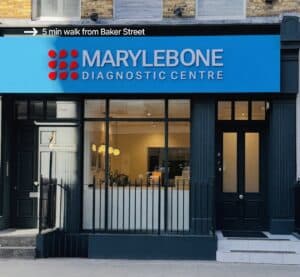
Marylebone Diagnostic Centre offers HbA1c blood testing at 73 Baker Street, London W1U 6RD. View the HbA1c test page .
HbA1c blood testing in Marylebone, London
Marylebone Diagnostic Centre
73 Baker Street, London W1U 6RD
Telephone: 020 7724 0540
Convenient for patients in Marylebone, the Harley Street area, Baker Street and across London.
Know your HbA1c. Understand your next step.
Whether you are checking your diabetes risk, monitoring an existing condition or reviewing your wider health, choosing the right test matters.
MDC offers standalone HbA1c testing, a Diabetic Profile and broader health screening options at its Baker Street clinic.
Medical references
- NICE – Type 2 diabetes: prevention in people at high risk
- Diabetes UK – Diagnostic criteria for diabetes
- NHS – Type 2 diabetes
This article is for patient education and does not replace medical advice. HbA1c results must be interpreted alongside symptoms, medical history and relevant investigations. Test prices and turnaround times should be confirmed before booking.