
Waiting for an assessment should not mean feeling forgotten.
For adults, children and families seeking answers about ADHD or autism, uncertainty can be exhausting. Questions about school, work, relationships and everyday wellbeing continue while an appointment is still months away.
At Marylebone Diagnostic Centre, we recognise the pressure on NHS services and the people who depend on them. We want to play a thoughtful, responsible part in the patient journey: listening, providing clear information and being honest about what our services can offer.
Understanding the pressure on assessment services
September 2026 Guardian reporting describes two-year minimum assessment waits in some English NHS areas. Read the reporting.
Each person waiting deserves to be heard. Our response is to support patients alongside existing services, recognising the dedication of NHS professionals and the importance of properly resourced specialist care.
ADHD and autism are distinct neurodevelopmental conditions that can coexist. The aim of assessment is to understand a person’s needs and identify appropriate support.
Questions families often ask
What does FRAT measure?
FRAT looks for antibodies against folate receptor alpha, a protein involved in folate transport. It differs from a routine blood folate test, which measures folate levels. It does not directly measure folate in the brain.
Should everyone awaiting assessment have FRAT?
No. FRAT is not a routine ADHD or autism screening test. Discuss it with an appropriately qualified clinician first, including its limitations and whether the result would change care. Research interest does not establish that testing benefits everyone.
Does a positive result explain someone’s symptoms?
Not on its own. A positive result means the measured antibodies were detected. It does not prove that they caused the person’s difficulties, confirm cerebral folate deficiency, or establish which treatment will help. Clinical interpretation is essential.
Does a negative result mean assessment is unnecessary?
No. A negative FRAT result does not rule out ADHD or autism and should not invalidate someone’s experiences. Continue the recommended assessment process and seek support for the difficulties affecting daily life.
Does FRAT automatically lead to folinic acid treatment?
No. Folinic acid, also called leucovorin, requires a separate prescribing decision. Evidence does not support its routine use for autistic children. Do not start high-dose folate or change medication based on a laboratory result alone.
How can MDC help with FRAT enquiries?
Our team can explain the testing process and confirm current fees, appointment arrangements and expected turnaround. Before booking, agree who will interpret the result and discuss any next steps.
Support while you wait
You can ask for help with current difficulties while the assessment process continues. What is available varies, so speak to your GP, assessment team or education professional.
- Check your referral: confirm it has been received and ask whom to contact if circumstances change.
- Describe everyday needs: keep examples of difficulties and the adjustments that help, at home, school or work.
- Ask about practical support: discuss available help with school staff, including the SENCO, or with your workplace.
- Address health concerns now: ask your GP about sleep, anxiety, eating difficulties or other symptoms rather than assuming they must wait for a diagnosis.
- Discuss assessment options: ask whether NHS Right to Choose applies to your circumstances in England and what the available providers offer.
The NHS guide to autism assessments explains referral routes and seeking support while waiting. You do not need to purchase a private blood test to ask for help.
Our plans for an ADHD pathway at MDC
We are planning a future ADHD pathway as part of MDC’s wider development. This remains dependent on securing funding and completing the expansion needed to deliver the service responsibly.
This pathway is not yet available, and we do not have a confirmed launch date. We will share details once the service, clinical arrangements and capacity are in place.
Until then, we will do our best to play our part within the services we currently offer, with clear information, realistic expectations and respect for each patient’s existing care.
Considering FRAT? Start with a conversation.
If your clinician has suggested FRAT, or you would like to understand the practical arrangements, contact MDC. Ask what the test can answer, what it cannot answer, and how the result would be used before deciding.
For further information, read our FRAT guide for children and families . Treatment decisions remain with the appropriate clinician; the laboratory result is only one part of the clinical picture.
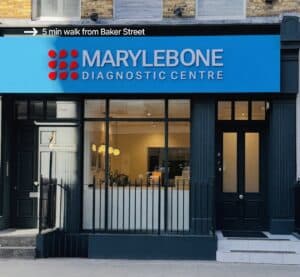
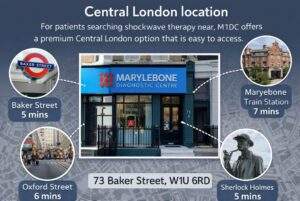
Visit us on Baker Street
Marylebone Diagnostic Centre73 Baker Street
London W1U 6RD
Please contact us before visiting to confirm the appropriate appointment and any preparation needed.