
Why Are We Not Getting Pregnant? The Complete Fertility Investigation Guide for Couples

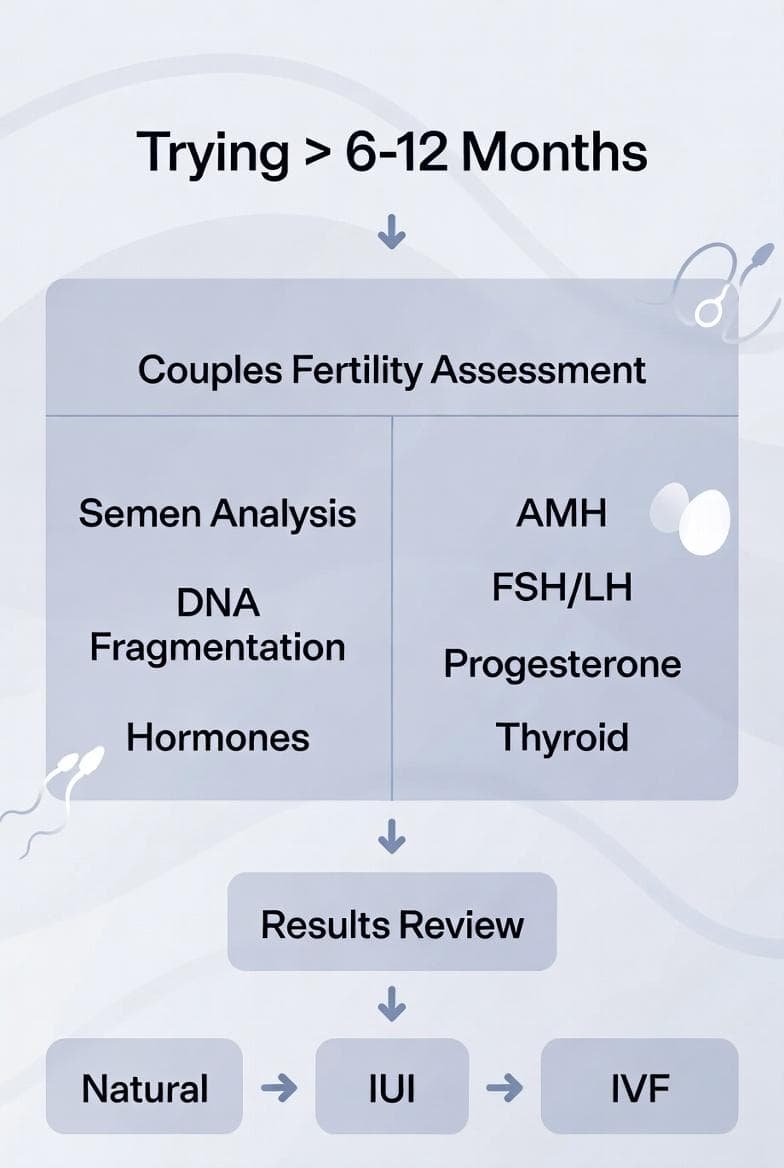
Trying For a Baby but Not Getting Pregnant?
For many couples, starting a family is one of life's most exciting milestones.
However, when pregnancy does not happen as expected, uncertainty and frustration can quickly follow.
One of the most common questions fertility specialists hear is:
"Why are we not getting pregnant?"
The answer is often more complex than people realise.
Fertility is influenced by many factors, including age, hormone balance, sperm quality, egg quality, ovulation, lifestyle, general health and underlying medical conditions.
While many couples immediately think about IVF, a comprehensive fertility assessment should often come first. Understanding what may be affecting fertility can help guide the most appropriate next steps and may even prevent unnecessary delays, expense and emotional stress.
At Marylebone Diagnostic Centre in Central London, we provide comprehensive fertility investigations for both men and women, helping couples gain a clearer understanding of their reproductive health.
How Common Are Fertility Problems?
Fertility difficulties are not solely a female issue. Male factors contribute to approximately 40–50% of cases, highlighting the importance of investigating both partners.
Infertility affects approximately one in seven couples in the United Kingdom.
According to fertility research and guidance from organisations such as NICE, infertility is generally defined as the inability to conceive after:
- 12 months of regular unprotected intercourse if the woman is under 35
- 6 months if the woman is over 35
- Immediate investigation if there is a history of recurrent miscarriage, known fertility conditions, or significant reproductive health concerns
Importantly, fertility difficulties are not solely a female issue.
Modern evidence suggests:
- Female factors contribute to approximately 30–40% of cases
- Male factors contribute to approximately 40–50% of cases
- Combined factors account for a significant proportion of couples
- Some cases remain unexplained despite extensive investigation
This is why fertility assessments should always involve both partners.
Many couples spend thousands on IVF before completing these investigations. A full fertility assessment for both partners is often the most important first step.
The Biggest Fertility Myth: It Must Be the Woman
One of the most damaging misconceptions surrounding fertility is that the problem usually originates with the female partner.
This is simply not true.
Studies consistently demonstrate that male factors contribute to almost half of all infertility cases.
Many men assume they are fertile because:
- They feel healthy
- They have normal sexual function
- They have fathered children previously
- They have no obvious symptoms
However, fertility problems frequently develop without warning signs.
A man may have:
- Low sperm count
- Poor sperm motility
- Abnormal sperm morphology
- High DNA fragmentation
- Hormonal imbalances
without experiencing any noticeable symptoms.
This is why a proper fertility assessment should investigate both partners from the outset.
Understanding Male Fertility
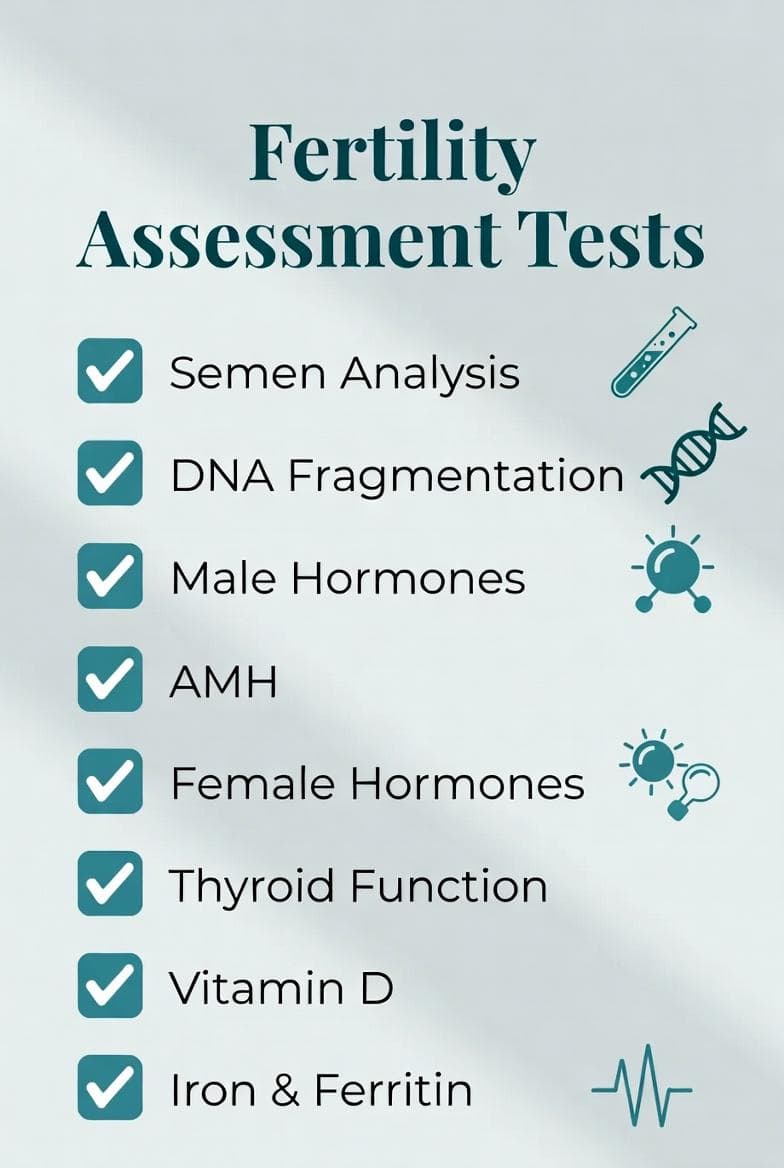
Male fertility depends on several factors working together successfully.
Healthy sperm must:
- Be produced in adequate numbers
- Have normal structure
- Swim effectively
- Carry intact genetic material
- Successfully fertilise an egg
Problems at any stage can reduce the chances of conception.
Semen Analysis: The Foundation Of Male Fertility Testing
A semen analysis remains one of the most valuable fertility investigations available.
This test evaluates:
- Sperm concentration
- Total sperm count
- Progressive motility
- Total motility
- Morphology
- Semen volume
- Semen pH
- Presence of inflammatory cells
Abnormal results may indicate reduced fertility potential and can often provide valuable clues regarding the underlying cause.
At Marylebone Diagnostic Centre, semen analysis forms a key component of our fertility assessment pathway.
Why Semen Analysis Is Sometimes Not Enough
A semen analysis provides important information, but it does not tell the whole story.
Many men receive "normal" semen analysis results yet continue to experience:
- Infertility
- Recurrent miscarriage
- Failed IVF cycles
- Poor embryo development
In these situations, additional investigations may be beneficial.
One of the most important is sperm DNA fragmentation testing.
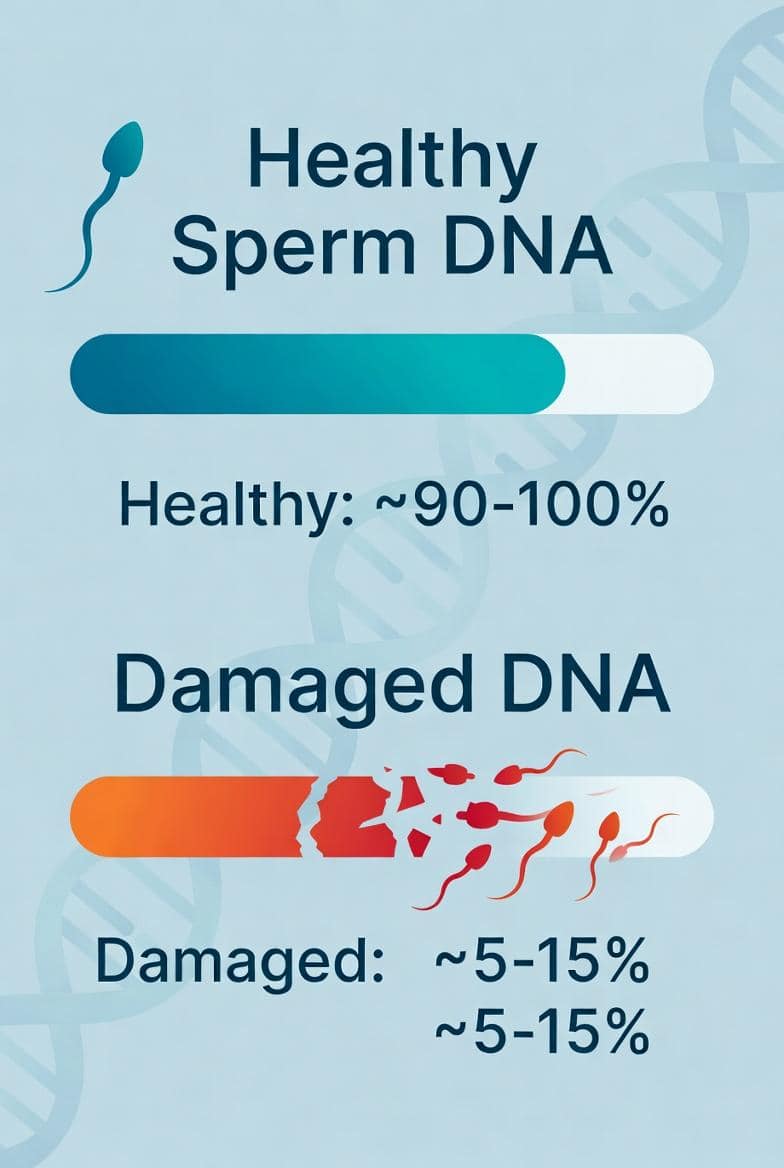
What Is DNA Fragmentation?
Every sperm cell carries genetic material that will contribute to the future embryo.
DNA fragmentation refers to damage within that genetic material.
Research has shown that elevated DNA fragmentation may be associated with:
- Reduced fertility
- Lower pregnancy rates
- Recurrent miscarriage
- Poor embryo quality
- Failed IVF cycles
Several studies published in reproductive medicine journals have demonstrated a relationship between high DNA fragmentation levels and poorer fertility outcomes.
Potential contributors include:
- Smoking
- Oxidative stress
- Varicoceles
- Advanced paternal age
- Environmental exposures
- Certain medical conditions
For couples experiencing unexplained infertility or failed fertility treatment, DNA fragmentation testing may provide valuable additional information.
Male Hormones and Fertility
Hormones play a critical role in sperm production.
Even subtle hormonal abnormalities can influence fertility.
A comprehensive male fertility hormone profile may include:
- Testosterone
- Free Testosterone
- FSH
- LH
- Prolactin
- SHBG
- Oestradiol
- Thyroid hormones
These hormones help regulate:
- Sperm production
- Sexual function
- Testicular function
- Reproductive health
Hormonal abnormalities can sometimes be identified and addressed before more invasive fertility treatments are considered.
For men interested in a broader assessment, we also recommend reading our Men's Health and Fertility Assessment resources available through Marylebone Diagnostic Centre.
Understanding Female Fertility
Female fertility is influenced by multiple biological processes.
Successful conception requires:
- Healthy eggs
- Regular ovulation
- Appropriate hormone balance
- A receptive uterine environment
- Healthy fallopian tubes
Disruption at any stage can reduce fertility.
Age And Fertility
Age remains one of the most significant factors affecting female fertility.
Women are born with their lifetime supply of eggs.
Over time:
- Egg numbers decline
- Egg quality declines
- Chromosomal abnormalities become more common
- Pregnancy rates reduce
This process accelerates after the mid-thirties.
However, age is only one piece of the puzzle.
Many younger women experience fertility challenges, while some older women conceive naturally without difficulty.
This is why personalised assessment is essential.
AMH Testing And Ovarian Reserve
Anti-Müllerian Hormone (AMH) has become one of the most recognised fertility blood tests.
AMH is produced by developing ovarian follicles and provides information about ovarian reserve.
AMH testing may be helpful for:
- Women considering pregnancy
- Women delaying motherhood
- Women exploring IVF
- Women with irregular periods
- Women concerned about declining fertility
It is important to understand that AMH does not predict whether pregnancy will occur naturally.
Instead, it helps estimate the remaining pool of eggs available within the ovaries.
This information can be valuable when planning fertility treatment or family-building decisions.
Female Hormones And Fertility
Hormonal balance is essential for reproductive health.
A female fertility hormone profile may include:
- FSH
- LH
- Oestradiol
- Progesterone
- Prolactin
- Testosterone
- SHBG
- Thyroid hormones
These hormones influence:
- Ovulation
- Menstrual cycles
- Egg maturation
- Implantation
- Pregnancy maintenance
Even small hormonal disturbances can affect fertility outcomes.
Hormone testing often forms one of the most important components of a fertility investigation.
Could PCOS Be Affecting Fertility?
Polycystic Ovary Syndrome (PCOS) is one of the most common hormonal conditions affecting women of reproductive age.
Many women remain undiagnosed for years.
Symptoms may include:
- Irregular periods
- Acne
- Excess facial or body hair
- Weight gain
- Difficulty losing weight
- Fertility challenges
PCOS can interfere with ovulation and make conception more difficult.
Fortunately, appropriate diagnosis often helps guide effective management strategies.
For further information, we recommend reading our dedicated PCOS testing and Women's Health resources.
Phone: 020 7724 0540 · Hours: Mon–Sat, 8:00am – 4:00pm
Ready to find answers?
A comprehensive fertility assessment for both partners is the most important first step. At Marylebone Diagnostic Centre, we offer same-day fertility investigations at our Baker Street clinic — with clear results and clinical guidance to help you move forward.

