
Discover Your Fertility Options: A Clearer Starting Point for Understanding Reproductive Health
Trying for a baby rarely feels as linear as people expect. For some, questions come up before they even start trying. For others, the uncertainty begins after months of negative tests, irregular cycles, previous pregnancy loss, or concerns about age, hormones, or sperm health. If you want to discover your fertility options, the most useful place to start is not guesswork – it is a clear, medically informed assessment of what may be affecting conception and what can be investigated next.
Fertility is not one issue with one answer. It is influenced by ovulation, hormone balance, ovarian reserve, sperm health, menstrual regularity, reproductive anatomy, general health, previous medical history, and timing. That is why a structured fertility pathway matters. Rather than relying on online symptom checkers or fragmented advice, a private assessment can help you move from uncertainty to practical next steps with greater speed and clarity.
What It Means to Discover Your Fertility Options
For many patients, the phrase sounds broader than it first appears. It does not only mean deciding whether fertility treatment is needed. It can also mean understanding whether your cycle is ovulatory, whether hormone levels suggest a need for further review, whether sperm parameters should be assessed, or whether imaging may help identify structural factors.
In practice, to discover your fertility options means building a clinical picture from history, testing, and medical interpretation. That picture may confirm reassurance, highlight an issue that needs follow-up, or show that several smaller factors are interacting. Fertility care is rarely about a single result in isolation.
This is especially relevant for people who are not yet ready for treatment but want clarity. You may be planning pregnancy in the near future, considering preservation of future fertility, monitoring an existing hormonal condition, or simply trying to understand whether delays in conception warrant investigation. Different questions require different pathways.
When a Fertility Assessment Is Worth Considering
Not everyone needs extensive testing immediately. Sometimes the right approach is targeted screening based on symptoms, age, and how long you have been trying to conceive.
A fertility consultation is often worth considering if:
- Your periods are irregular, absent, or unusually painful
- You have PCOS or thyroid disease
- You have experienced recurrent miscarriage
- You have had previous pelvic infection or surgery
- You have concerns about erectile dysfunction or sperm quality
- You have been trying to conceive without success
It is also reasonable to seek assessment if you have been trying for a number of months without success and want a clearer view of what should happen next.
Private fertility assessment can be particularly helpful for people who value discreet access, prompt appointments, and a joined-up pathway that combines diagnostics with clinical interpretation rather than leaving them to make sense of raw numbers alone.
The Main Areas Looked At in Fertility Testing
Hormones and Ovulation
Hormonal testing often forms the foundation of fertility assessment. Depending on your history and cycle, this may include markers linked to ovarian reserve, ovulation, thyroid function, and other reproductive hormones.
These results can help show:
- Whether ovulation is occurring regularly
- Whether ovarian reserve should be investigated further
- Whether hormonal imbalance may be affecting conception
- Whether endocrine conditions require treatment
Timing matters. Some fertility tests are best performed on specific days of the menstrual cycle, while others can be carried out at any time.
Correct interpretation requires context, including age, symptoms, medical history, medications, and fertility goals.
Sperm Health
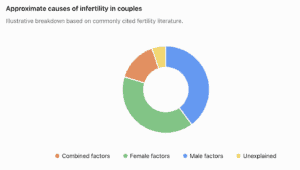
Male fertility contributes to approximately half of all fertility challenges experienced by couples. However, it is often investigated later than female fertility despite being one of the most important factors affecting conception.
A professional Semen Analysis provides valuable information about:
- Sperm concentration (count)
- Motility (movement)
- Morphology (shape)
- Semen volume
- Overall reproductive potential
At Marylebone Diagnostic Centre, patients can book a dedicated Semen Analysis in London service for a comprehensive evaluation of sperm health:
👉 https://www.marylebonediagnosticcentre.com/services/sperm-analysis/
Where clinically indicated, additional investigations such as DNA fragmentation testing and male hormone profiling may also be recommended to provide a more complete picture of reproductive health.
Assessing both partners early often reduces delays and helps create a more targeted fertility plan.
Ultrasound and Reproductive Imaging
Imaging can add detail that blood tests cannot provide. Pelvic ultrasound may help assess ovarian appearance, follicle activity, uterine structure, and the presence of fibroids, cysts, or other findings that may require follow-up.
For some patients, anatomy is a key issue. For others, imaging simply adds reassurance that the uterus and ovaries have been reviewed alongside blood markers and symptoms.
Wider Health Factors
Fertility does not sit separately from general health.
Several broader factors may influence reproductive health, including:
- Thyroid dysfunction
- Vitamin deficiencies
- Iron deficiency
- Metabolic health
- Weight management
- Sleep quality
- Chronic illness
- Lifestyle factors
- Sexual health conditions
A personalised fertility pathway allows testing to be tailored to your history rather than relying on a generic screening package.
Why Fertility Testing Needs Interpretation, Not Just Results
A common frustration in healthcare is receiving laboratory results without understanding what they mean.
Fertility testing is particularly vulnerable to this problem because patients are often trying to make important life decisions based on technical medical information.
For example:
- A hormone result may be within the normal range but still require consideration alongside symptoms.
- A semen analysis may need repeating because sperm quality can naturally fluctuate.
- An ultrasound finding may be entirely benign or clinically significant depending on the wider picture.
That is why medically reviewed interpretation matters.
Good fertility care should explain:
- What has been tested
- What the results suggest
- What remains uncertain
- Whether further investigation is required
- Which options may be available next
Discover Your Fertility Options as an Individual or a Couple
Some patients seek fertility testing alone, while others come as a couple.
Both approaches can be appropriate.
If you are not currently trying to conceive but want a clearer understanding of your reproductive health, an individual assessment can help you make informed decisions about timing, monitoring, or further review.
For couples, coordinated assessment is often more efficient. It reduces delays and creates a clearer understanding of whether fertility factors are predominantly male, female, combined, or currently unexplained.
There is no single correct route. Your age, symptoms, medical history, and reproductive goals all matter.
Book Your Fertility Package Now
If you are trying to conceive, planning a family, or simply want greater clarity about your reproductive health, our specialist fertility packages provide a structured and clinically guided starting point.
Marylebone Diagnostic Centre offers comprehensive fertility investigations designed to identify potential issues early and help patients make informed decisions about their next steps.
Our fertility pathways may include:
- Fertility hormone testing
- Ovarian reserve assessment
- Male fertility screening
- Semen analysis
- DNA fragmentation testing
- Vitamin and nutritional assessment
- Sexual health screening where appropriate
- Clinical interpretation and follow-up support
👉 Book your fertility package now
https://www.marylebonediagnosticcentre.com/men-women-health/men-health/
What to Expect From a Private Fertility Pathway
A strong private pathway should feel structured rather than overwhelming.
Assessment usually begins with a review of:
- Symptoms
- Menstrual cycle history
- Previous pregnancies
- Medication use
- Family history
- Existing medical conditions
- Lifestyle factors
Testing is then selected according to that history.
The key value comes from continuity. Results should not sit in isolation.
You should understand whether findings:
- Suggest normal reproductive health
- Identify a potential issue
- Require monitoring
- Need further investigation
- Support referral to a fertility specialist
Patients often choose private fertility assessment because they want:
- Faster appointments
- Rapid results
- Clinical oversight
- Discreet care
- Clear next steps
Why Choose Marylebone Diagnostic Centre for Fertility Testing?
Choosing the right fertility clinic is about more than obtaining test results.
Patients choose Marylebone Diagnostic Centre because we provide:
✔ Comprehensive male and female fertility investigations
✔ Fertility hormone testing
✔ Semen analysis and advanced sperm health assessment
✔ Fast appointments in Central London
✔ Results typically available within 24–42 hours depending on the test
✔ Clinical interpretation and personalised guidance
✔ Discreet and confidential care
✔ Convenient location near Baker Street Station
Whether you are just starting your fertility journey or looking for answers after months of uncertainty, our team can help you understand your options.
Explore our fertility services
https://www.marylebonediagnosticcentre.com/men-women-health/men-health/
Questions Worth Asking Before You Book
Before arranging fertility testing, it helps to ask what your main concern actually is.
For example:
- Are you actively trying to conceive?
- Are you planning pregnancy within the next few years?
- Are your menstrual cycles irregular?
- Do you have concerns about sperm health?
- Have you experienced miscarriage or failed fertility treatment?
- Are you looking for reassurance or answers?
The clearer the question, the more useful the testing pathway becomes.
It is also worth checking whether:
- Clinical review is included
- Results are explained by a healthcare professional
- Further support is available if needed
- Testing is tailored to your circumstances
Ready to Understand Your Fertility Options?
If you are concerned about fertility, experiencing delays in conception, or simply want reassurance about your reproductive health, early testing can provide valuable answers.
Recommended Fertility Services
Comprehensive Fertility Packages
https://www.marylebonediagnosticcentre.com/men-women-health/men-health/
Semen Analysis
https://www.marylebonediagnosticcentre.com/services/sperm-analysis/
Male Fertility Assessment
https://www.marylebonediagnosticcentre.com/men-women-health/men-health/
Appointments are available at Marylebone Diagnostic Centre in Central London, just minutes from Baker Street Station.
Conclusion
Understanding fertility is not about rushing to the biggest intervention. Often, it starts with accurate diagnostics, sensible interpretation, and a plan that reflects your circumstances rather than a one-size-fits-all process.
When you discover your fertility options through a clinically led assessment, you gain something far more valuable than reassurance alone – a clearer understanding of your reproductive health and a practical roadmap for what comes next.