
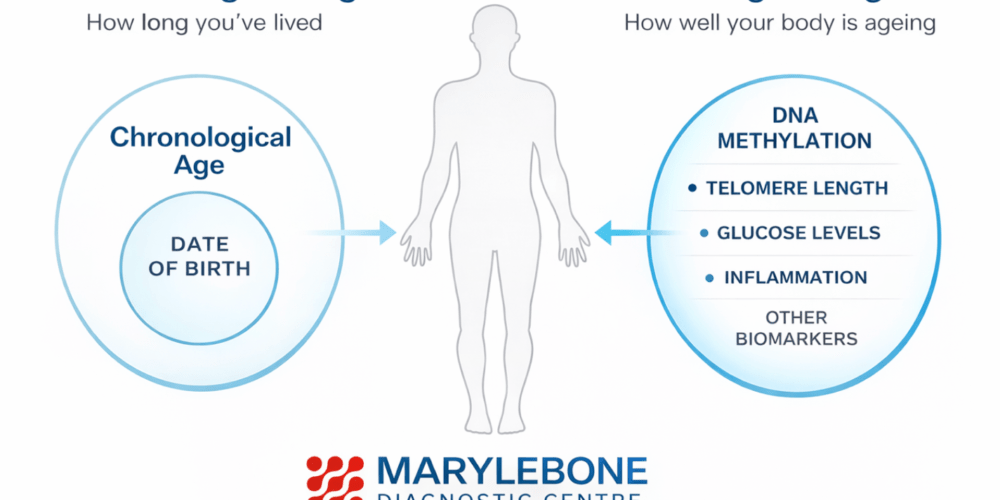
How early biological signals, trend-based testing, and data-led decisions are redefining ageing care
Longevity Is Not a Supplement Problem
Longevity medicine is often marketed through supplements, wellness plans, and lifestyle promises. While these approaches may support general wellbeing, they do not address the true starting point of ageing.
Ageing Begins with Biological Signals
Ageing does not begin with symptoms — it begins with biological signals. By the time fatigue, weight gain, sexual dysfunction, or metabolic disease appear, the underlying physiological changes have often been developing silently for years.
These early changes are rarely visible without proper testing, which is why symptom-based interventions frequently arrive too late to make a meaningful long-term impact.
A Diagnostic-First Approach to Longevity
At Marylebone Diagnostic Centre (MDC), longevity is approached differently. The process begins with diagnostics — not assumptions.
Instead of reacting to symptoms, MDC focuses on identifying early biological shifts, monitoring trends over time, and understanding how key markers change long before disease develops.
Why Trend-Based Testing Matters
One-off test results offer only a snapshot. Longevity medicine, however, is built on patterns, trajectories, and early deviations from baseline.
This article explores why diagnostics are becoming the foundation of modern longevity medicine, how MDC applies this model across both male and female health, and why tracking trends over time is far more valuable than relying on isolated results.
The Core Misunderstanding in Longevity Care
Most longevity approaches focus on intervention. Far fewer focus on measurement.
Where Longevity Care Often Falls Short
- Treating age as a number rather than a biological process
- Relying on symptoms instead of early biological markers
- Using generic optimisation plans without baseline diagnostic data
Longevity Requires Early Detection
Longevity is not about living longer blindly. It is about detecting decline early enough to change trajectory.
That requires diagnostics.
Longevity Is a Data Problem
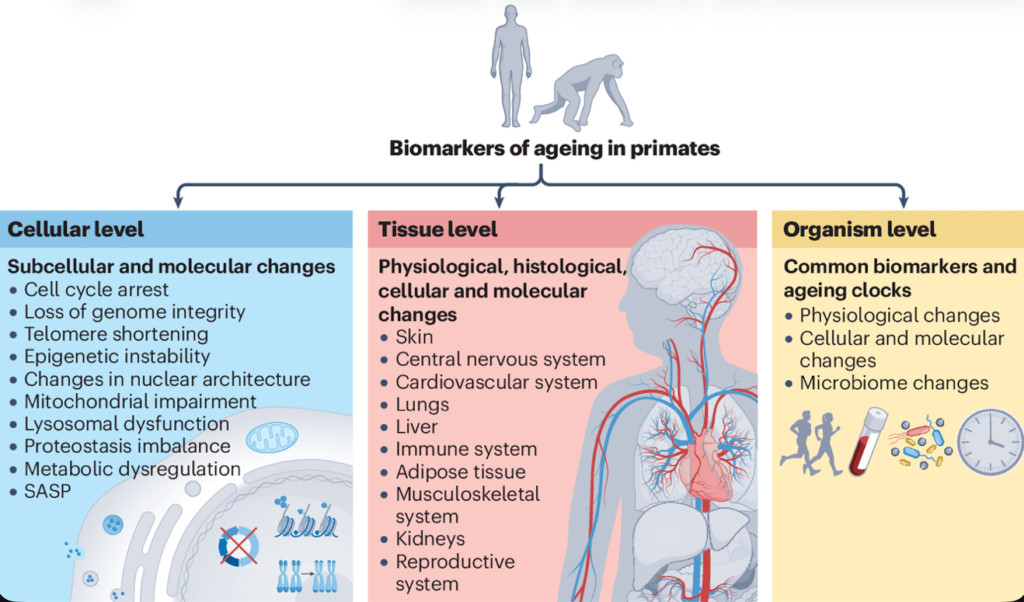
Ageing is not linear and it does not affect a single system in isolation. It influences multiple biological systems simultaneously, often at different rates.
Systems Affected by the Ageing Process
- Hormonal regulation
- Metabolic efficiency
- Inflammatory balance
- Renal and cardiovascular resilience
- Reproductive and sexual health
No single test can capture this complexity. Longevity medicine requires layered diagnostics and longitudinal data to reveal how these systems interact and change over time.
MDC’s Longevity Principle
Longevity must be measured across systems, over time. Sustainable health optimisation depends on understanding how biological markers evolve — not reacting to isolated results.
Hormones: The Earliest Ageing Signals
Hormonal changes often occur long before clinical disease develops. In longevity medicine, these shifts are early indicators of biological ageing rather than conditions to be treated in isolation.
Key Longevity-Relevant Hormones
| Hormone | Why It Matters |
|---|---|
| Testosterone | Muscle mass, energy, libido |
| Free Testosterone | Functional hormone availability |
| SHBG | Hormone binding dynamics |
| Oestradiol | Bone, cardiovascular, and metabolic health |
| Thyroid Markers | Metabolic rate and fatigue |
Declining hormones are not diagnoses. They are signals.
Tracking these trends enables early intervention without overtreatment, supporting long-term health rather than reactive care.
PSA: A Risk Signal, Not a Diagnosis
PSA is frequently misunderstood. At MDC, PSA is used as a trend-based risk indicator, not a standalone diagnostic tool.
PSA in a Longevity Context
| PSA Use | Clinical Value |
|---|---|
| Baseline | Establish individual reference |
| Trend Monitoring | Detect deviation early |
| Contextual Review | Avoid unnecessary alarm |
| Age-Adjusted Interpretation | Personalised assessment |
For men over 40, PSA becomes part of a longitudinal health record — supporting informed decisions rather than reactive care.
Female Longevity: Beyond Fertility
Longevity diagnostics for women are often focused too narrowly on fertility years. MDC’s approach evaluates broader markers of long-term health and resilience.
- Hormonal resilience
- Metabolic stability
- Bone and cardiovascular health
Female Longevity Markers
| Marker | Longevity Relevance |
|---|---|
| AMH | Ovarian ageing trajectory |
| Oestradiol | Cardiovascular and bone health |
| Thyroid Function | Energy and weight regulation |
| Iron Status | Cognitive and physical stamina |
Understanding these patterns early allows women to plan, adapt, and intervene proactively — before decline becomes symptomatic.
Urine Diagnostics: The Silent Early-Warning System
Urine testing is one of the most underused tools in longevity medicine. Yet it often reveals early physiological stress before changes become visible in blood markers.
At MDC, urine diagnostics help identify:
- Early renal stress
- Metabolic imbalance
- Inflammatory activity
- Infection risk
Why Urine Matters in Ageing
| Urine Finding | Longevity Implication |
|---|---|
| Protein traces | Early renal strain |
| Glucose | Metabolic dysregulation |
| Inflammatory markers | Accelerated ageing risk |
| Abnormal pH | Systemic imbalance |
Urine often shows physiological change before blood markers do, making it a valuable early-warning signal in longevity profiling.
Reproductive Health as a Longevity Marker
Reproductive decline frequently mirrors overall biological ageing. Changes in reproductive health often reflect deeper systemic processes rather than isolated dysfunction.
In Men
- Declining semen quality
- Reduced testosterone
- Increased DNA damage
In Women
- Hormonal instability
- Reduced ovarian reserve
- Metabolic shifts
These are not isolated issues. They reflect systemic ageing processes across multiple biological systems.
MDC integrates reproductive diagnostics into longevity profiling — not as endpoints, but as biological indicators of resilience and decline.
Why Trends Matter More Than Thresholds
Most reference ranges are population-based. Longevity, however, is individual.
One-Off Testing vs Trend-Based Monitoring
| Approach | Limitation | Longevity Value |
|---|---|---|
| Single test | Snapshot only | Low |
| Annual testing | Limited comparison | Moderate |
| Trend analysis | Detects direction | High |
A result within range can still represent decline when viewed longitudinally. This is where diagnostics become predictive rather than reactive.
IV Therapy: Support, Not Replacement
IV therapy is often marketed as longevity itself. At MDC, it is positioned as supportive — not foundational.
Diagnostic-Led IV Therapy Model
| Step | Purpose |
|---|---|
| Baseline testing | Identify deficiencies |
| Clinical review | Determine relevance |
| Targeted IV therapy | Correct confirmed gaps |
| Follow-up testing | Assess response |
Without diagnostics, IV therapy becomes guesswork. With diagnostics, it becomes precision support.
The Longevity Stack at MDC
MDC’s longevity diagnostics combine multiple layers of assessment to build a comprehensive biological baseline.
| Layer | Purpose |
|---|---|
| Blood testing | Systemic health |
| Hormones | Endocrine ageing |
| Urine analysis | Early stress detection |
| Reproductive markers | Biological resilience |
| PSA / AMH | Age-related trend tracking |
Together, these layers form a biological baseline that can be monitored, adjusted, and optimised responsibly over time.
What Patients Gain from Diagnostic-Led Longevity
Patients experience measurable, actionable insights that transform how longevity is approached.
- Clear baselines
- Reduced uncertainty
- Personalised monitoring plans
- Confidence in interventions
Longevity becomes measurable, not speculative.
What Clinicians Gain
- Objective decision support
- Reduced overtreatment
- Better patient engagement
- Stronger outcome tracking
Care becomes proactive, not reactive.
Why Diagnostics Will Define Longevity Medicine
- Measurement quality
- Data continuity
- Clinical interpretation
- Ethical intervention
Centres that rely on lifestyle advice alone will struggle to demonstrate outcomes. Diagnostics provide proof, not promises.
Our Thoughts
Longevity does not start with pills, peptides, or protocols. It starts with understanding where the body is heading.
By focusing on early biological signals — hormones, urine markers, reproductive health, PSA, and trend analysis — Marylebone Diagnostic Centre places diagnostics at the centre of longevity medicine.
This is not anti-intervention. It is intervention done at the right time, for the right reason.
Related MDC Longevity Services
- Hormone health profiles (male and female)
- PSA baseline and trend monitoring
- Urine health screening
- Reproductive health diagnostics
- Diagnostic-led IV therapy support