ECG vs Electrocardiograph: What Is the Difference?
ECG vs Electrocardiograph: What Is the Difference?
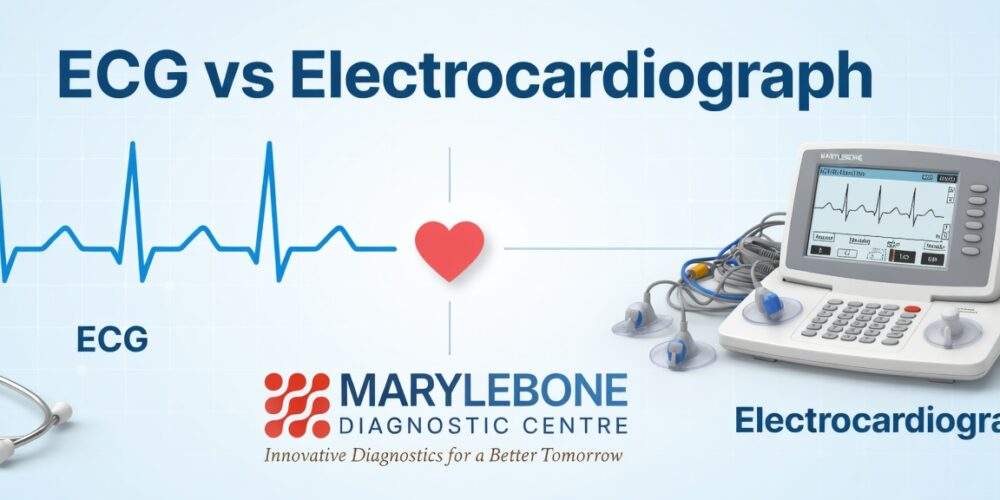
An electrocardiogram (ECG) is the test result or tracing that shows your heart’s electrical activity. An electrocardiograph is the machine that records it.
In simple terms:
- ECG = the recording
- Electrocardiograph = the machine
At Marylebone Diagnostic Centre, we offer private ECG testing in Central London with fast appointments and a simple, professional patient experience.
Quick Answer: ECG vs Electrocardiograph
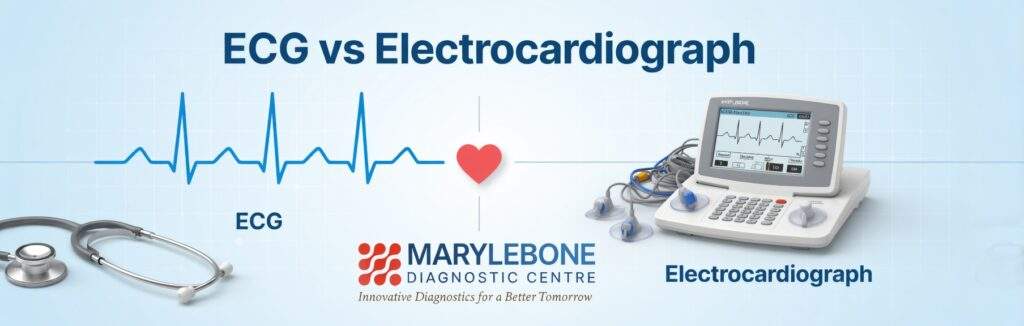
ECG
The graph, tracing, or test result that shows how the heart is beating.
Electrocardiograph
The medical device that records the ECG.
EKG
Another name for ECG. It means the same test.
What Is an ECG?
An ECG is a quick, non-invasive test that records the electrical activity of your heart. It helps clinicians assess heart rhythm, rate, and certain signs of cardiac stress or damage.
A standard ECG usually takes only a few minutes and does not involve needles, injections, or radiation.
What Is an Electrocardiograph?
An electrocardiograph is the machine used to perform the ECG test. It connects to electrodes placed on the skin and turns the heart’s electrical signals into a visible tracing.
Most modern electrocardiographs are digital and can print, store, and review results quickly.
Why Would Someone Need an ECG?
Common reasons include:
- chest pain
- palpitations
- dizziness
- fainting
- shortness of breath
- routine health checks
- pre-operative assessment
- monitoring existing heart conditions
How Does an ECG Work?
Small adhesive electrodes are placed on the chest, arms, and legs. These detect the electrical signals produced by each heartbeat. The electrocardiograph then records those signals as an ECG trace.
The test is painless and usually takes around 5 to 10 minutes.
What Can an ECG Show?
This is a strong SEO and patient section.
An ECG may help detect:
- abnormal heart rhythms
- fast or slow heart rate
- signs of strain on the heart
- previous or current heart injury
- certain conduction abnormalities
It is important to note that a normal ECG does not rule out every heart condition.
What an ECG Cannot Show
An ECG is useful, but it does not show everything. Some heart problems may need:
- echocardiogram
- blood tests
- Holter monitoring
- imaging
- specialist review
ECG, EKG, and Electrocardiograph Explained Simply
People often use these terms interchangeably, but they are not exactly the same.
- ECG = the test or tracing
- EKG = another spelling of ECG
- Electrocardiograph = the machine
If a clinic says they offer an ECG, they mean the test. They use an electrocardiograph to perform it.
What Happens During an ECG Appointment?
At your appointment:
- You will be asked to lie down.
- Small electrodes will be placed on your skin.
- The machine records your heart activity.
- The tracing is reviewed by a clinician.
The process is quick, discreet, and straightforward.
Is an ECG Painful or Dangerous?
No. An ECG is painless, non-invasive, and very safe. It does not send electricity into the body. It only records the heart’s natural electrical activity.
Some people notice mild discomfort when the sticky pads are removed, but the test itself does not hurt.
Private ECG Testing in Central London
If you need a private ECG in London, Marylebone Diagnostic Centre offers:
- Central London location
- fast appointments
- discreet service
- professional clinical setting
- easy access from Baker Street and Marylebone
When Should You Book an ECG?
You should consider booking an ECG if you have:
- palpitations
- chest discomfort
- dizziness
- fainting episodes
- unexplained breathlessness
- a family history of heart problems
- concerns before surgery or treatment
If symptoms are severe or sudden, urgent medical care may be needed.
What is the difference between an electrocardiogram and an electrocardiograph?
An electrocardiogram is the tracing or result of the test. An electrocardiograph is the machine that records it.
What is the difference between an ECG and an electrocardiograph?
Is ECG the same as EKG?
What does an ECG test check for?
How long does an ECG take?
Is an ECG painful?
Can an ECG detect heart problems?
Do I need an ECG for palpitations?
Where can I get a private ECG in London?
Same-day appointments available – Book Now
Results within 24 – 42 hours depending on the test
Private suites Discreet and confidential care
On-site doctor review
No GP referral needed for most services
Central London location
Marylebone Diagnostic Centre
73 Baker Street, London W1U 6RD
+44 7495 970109
Monday–Saturday, 8:00–16:00
5-minute walk from Baker Street tube
marylebonediagnosticcentre.com
Marylebone Diagnostic Centre is based at 73 Baker Street, London W1U 6RD, in the heart of Central London. The clinic is around a 5-minute walk from Baker Street tube station and is easily accessible from Marylebone, Paddington, Harley Street, and surrounding areas.
DR LAUREN HOLLAND